

How Lightweight Grip Sensors Work: Golf Tracking Explained
Lightweight grip sensors sound fancy, but the core idea is surprisingly simple: they detect when your fingers touch the grip and capture that contact data in real time. No wires, no bulk, no interference with your swing. The technology sits invisibly on your club handle and does its job without you thinking about it once.
But how do these little devices actually work? Let's break down the science, the practical benefits, and why they're becoming an essential tool for golfers who want to protect their equipment investment.
In this article
- What Are Lightweight Grip Sensors and Why Do They Matter?
- The Core Technology: How Pressure Sensing Actually Works
- How the Data Collection Works Without Slowing You Down
- Why Lightweight Design Matters for Your Game
- Real-World Performance: What This Means on the Course
- How Sensors Attach and Stay Put During Play
- Battery Life and Connectivity: What to Expect
- Why This Matters More Than You Think
- Common Questions About How Grip Sensors Actually Perform
What Are Lightweight Grip Sensors and Why Do They Matter?
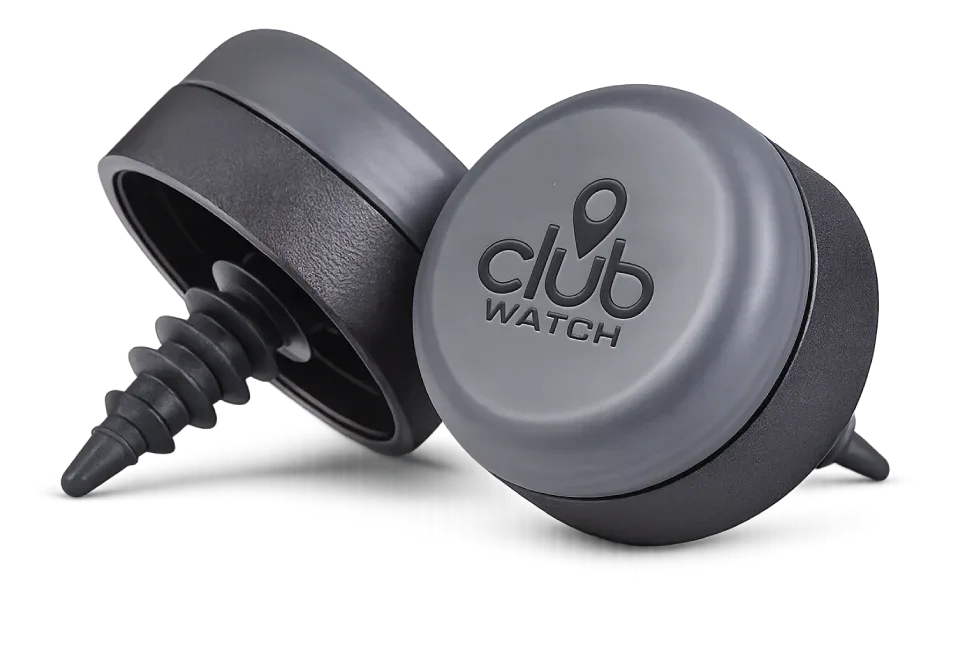
A lightweight grip sensor is a small device that attaches directly to your golf club grip and uses built-in pressure sensing technology to detect finger contact and positioning. When you grip the club, the sensor registers the pressure and sends that data wirelessly to your phone or golf computer.
The real magic is in how discreet they are. These sensors are engineered to add almost no noticeable weight or bulk to your grip, so your clubs feel exactly the same as they always have. You're not adjusting your swing, changing your grip pressure, or thinking about technology while you're out on the course.
The biggest reason golfers care about grip sensors is peace of mind. Losing clubs happens more often than most golfers like to admit, and replacing a full set is expensive. Golf Club Watch Knowledge built their entire system around this problem, using lightweight sensors paired with real-time alerts so you know immediately if a club is left behind on the course.
Related: Golf Club Tracking System Comparison Guide 2026
The Core Technology: How Pressure Sensing Actually Works
At the heart of each lightweight grip sensor is nano-composite pressure sensing technology. Sounds technical, but here's what it does in plain English: it detects the subtle pressure your fingers apply to the grip surface.
When you wrap your fingers around the club, the sensor has thousands of tiny touch points built into its surface. These points measure the pressure and position of your grip in real time. Advanced sensors can capture over 6,000 data points per swing without slowing down or draining battery.
The sensor doesn't need to be thick or heavy to do this. Nano-composite materials let manufacturers pack serious sensing power into something thinner than a pencil eraser. That's why your clubs still feel like your clubs.
The data collected gets transmitted wirelessly via Bluetooth to your phone or golf tracking device. From there, it can be used for shot mapping, distance calculation, swing analysis, or simply to track that your clubs are still in your bag.
How the Data Collection Works Without Slowing You Down
Here's where lightweight grip sensors really shine: they operate in real-world conditions without draining your battery or creating lag. Your phone won't slow down, your clubs won't feel different, and you won't get notifications every single time you adjust your grip.
Related: Lightweight Golf Club Grip Sensors Explained: Stop Losing Clubs
The sensor collects data passively as you play. It's constantly monitoring pressure and positioning, but it only transmits significant events. When you make a swing, the pattern of pressure and release is recognized by the sensor's built-in logic, and that swing event gets logged and sent to your app.
This happens so quickly and smoothly that you'll forget the sensors are even there. They're designed to be imperceptible during normal play, which means they won't interfere with your technique or your feel for the club.
Why Lightweight Design Matters for Your Game

The weight of your clubs matters. Add even a few grams to the grip and you change the club's balance, swing weight, and feel. A poorly designed sensor can throw off your entire swing rhythm.
That's why lightweight grip sensors are such a big deal. Engineers designed them to integrate with your existing grip without adding noticeable weight. Your 7-iron still feels like a 7-iron, not like a 7-iron with a sensor bolted on.
This non-intrusive design is essential for serious golfers who have spent years dialing in their equipment. Your muscle memory stays intact, your tempo stays the same, and your swing stays true.
Real-World Performance: What This Means on the Course
In practice, lightweight grip sensors enable a bunch of useful features without compromising your game. Here's what becomes possible:
- Lost club alerts: Leave a club behind and your phone buzzes immediately. No more walking back to the previous hole wondering if you left something.
- Grip pressure data: Track how your grip changes under pressure. Some golfers squeeze tighter on difficult shots—that data can reveal tension patterns.
- Shot mapping: Which clubs are you actually using most on your course? The sensor logs it.
- AI swing analysis: Premium features can analyze your swing patterns across dozens of shots and identify inconsistencies.
None of this requires you to change how you play. The sensor is just listening and recording.
How Sensors Attach and Stay Put During Play
Lightweight grip sensors clip or wrap around your existing grip without requiring adhesive or permanent modification. They're designed to stay in place through a full round of golf, including bunker shots, water hazards, and aggressive swings.
The attachment method is intentionally simple so you can add or remove sensors as needed. If you want to track just your putter and wedges, you can do that. If you want to protect your entire bag, you have that option too. Golf Club Watch Knowledge offers different kits like the ClubWatch 4-Pack — Protect Your Putter & Wedges for targeted protection or the ClubWatch 13-Pack — Whole-Bag Coverage, Best Value if you want to track every club in your bag.
The durability is solid. These sensors are built to handle the weather, the occasional drop, and the repetitive impact of golf play. They're weatherproof and designed to last an entire season.
Battery Life and Connectivity: What to Expect

Battery life is critical for a device you don't want to think about. Lightweight grip sensors use low-energy Bluetooth, which means they can run for weeks or months on a single charge depending on how often you play.
Connectivity is equally straightforward. The sensors pair with your phone via Bluetooth once, and then they reconnect automatically whenever you're on the course. No manual syncing, no app that crashes, no technical headaches.
If your phone loses signal or Bluetooth drops for a moment, the sensor buffers the data and uploads it once you're back in range. You don't lose any information.
Why This Matters More Than You Think
Equipment is an investment. Lightweight grip sensors give you real-time visibility into your gear so you can play with confidence instead of anxiety.
They also give you data-driven insights into your game. How often do you actually use that 3-wood? Which wedges get the most work? How does your grip pressure change in high-pressure situations? That information can help you make smarter equipment choices and identify swing patterns you didn't know you had.
If you're ready to add this layer of protection and insight to your game, Golf Club Watch Knowledge makes it simple. Sensors attach to your grips, pair with the app, and get out of your way while doing the work in the background.
Related: Best Smart Sensors for Golf Club Protection in 2026
Common Questions About How Grip Sensors Actually Perform
Do lightweight grip sensors interfere with your swing or feel?
No. They're specifically engineered to be imperceptible. The sensor adds minimal weight and sits on the grip in a way that doesn't change how the club balances or feels in your hands. Your muscle memory and swing tempo stay exactly the same.
How accurate is the pressure sensing technology?
Advanced nano-composite sensors can capture over 6,000 data points per swing, so they're extremely sensitive and accurate. They detect even subtle changes in grip position and pressure, which is why they work well for both basic club tracking and advanced swing analysis.
Can you use lightweight grip sensors on oversized grips?
Yes. If you play with larger grips, ClubWatch SuperStroke — For Oversized Grips is designed to fit securely and comfortably on thicker grip styles without adding bulk or changing the feel.
What happens if you leave a sensor on the course?
The real value of these sensors is preventing that scenario entirely. Your app alerts you in real time if a club with a sensor leaves your bag, so you know to go back and grab it before you finish the hole. But if you do somehow leave a sensor behind, it's a small, inexpensive piece of equipment compared to the cost of replacing a full club.