

How Golf Club Tracking Technology Works: 2026 Review
Golf club tracking technology sounds complicated, but honestly? It's pretty straightforward once you break it down. At its core, these systems use lightweight sensors that attach to your clubs and communicate with your phone to keep tabs on your equipment in real time. If you've ever walked off the 18th green only to realize you left a wedge behind, you know the gut punch that comes with a lost club. The good news: modern tracking solutions actually work, and they're getting smarter every year.
In this article
- What Is Golf Club Tracking Technology?
- How the Sensors Actually Work
- The Mobile App and Real-Time Alerts
- Cloud Storage and Data Analytics
- Different Types of Tracking Systems
- Why YouTube Reviews Matter (But Aren't Everything)
- Key Performance Metrics to Know
- Real-World Accuracy and Limitations
- Installation and Setup
- Cost vs. Benefit
- Privacy and Data Security
- The Future of Golf Club Tracking
- What to Look for When Choosing a System
- Frequently Asked Questions
What Is Golf Club Tracking Technology?
Golf club tracking technology is essentially a locating and monitoring system designed to prevent lost clubs on the course. It works through a combination of three key components: physical sensors that attach to your clubs, a mobile app that communicates with those sensors, and cloud-based software that stores your data and triggers alerts.
Think of it like Apple AirTags, but built specifically for golf. When your sensor detects that you've left a club behind or moved away from it, your phone gets a notification. Some systems go even further and track which clubs you used during a round, analyze your swing patterns, and map your GPS position on the course.
Related: Golf Club Loss Prevention Best Practices in 2026
How the Sensors Actually Work
The physical sensors are the heart of the operation. Most modern golf club tracking sensors use Bluetooth Low Energy (BLE) technology, which means they consume minimal power and can last for months on a single battery charge.
Related: How Golf Club Tracking Technology Works: A Guide
Related: Golf Club Tracking System Comparison Guide 2026
Related: Best Golf Club Finder Device Guide 2026
Here's the step-by-step:
- The sensor pairs with your smartphone via Bluetooth when you start your round.
- As you move around the course, the sensor continuously transmits its location and status to your phone.
- If you walk more than a preset distance from your club (usually 10-15 feet), your app triggers an alert.
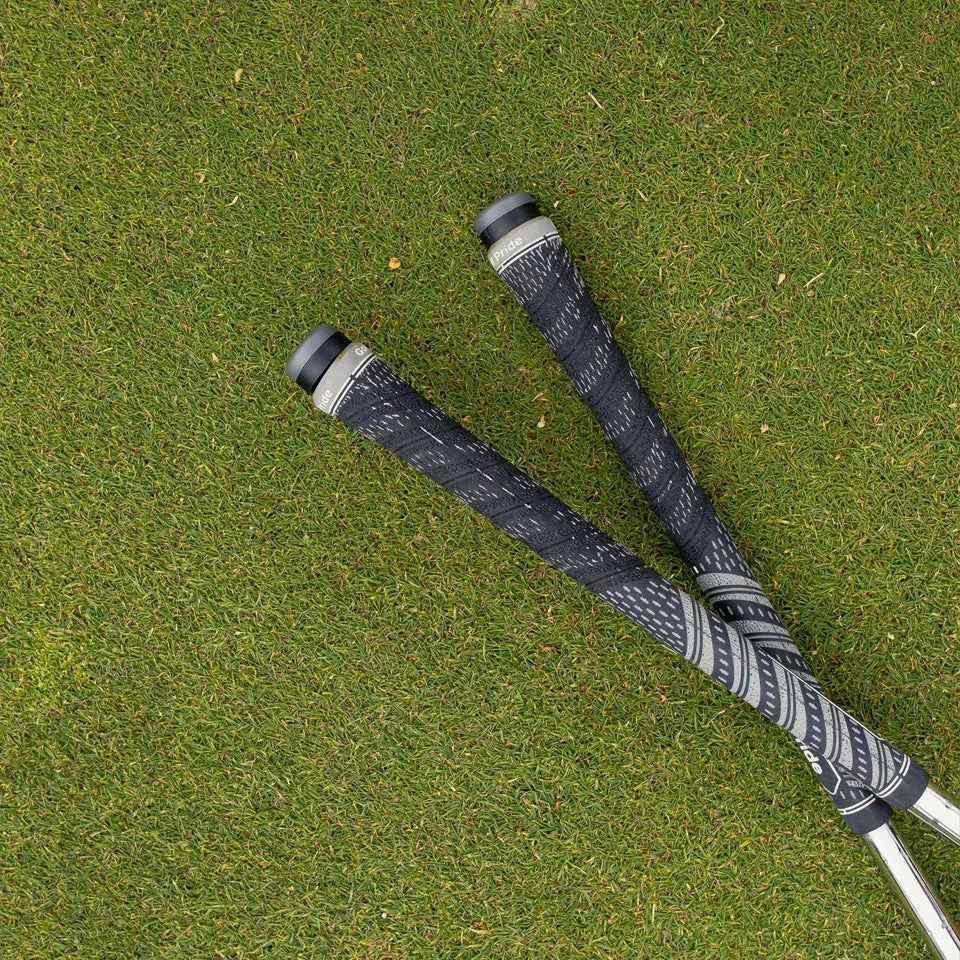
- The sensor itself is lightweight and clips onto your club grip, so it doesn't interfere with your swing or club balance.
One thing people worry about: will this thing mess with my game? The answer is no. These sensors weigh just a few grams and are designed to stay completely out of your way during your swing. You forget they're there almost immediately.
The Mobile App and Real-Time Alerts
Your phone is the command center. The app pairs with your sensors and displays which clubs are in your bag at any given moment. Most systems show you a live inventory of your clubs as you play.
If you leave a club behind, you get an alert within seconds. Some apps also let you see exactly where on the course you left it, which is a game-changer if you're playing a crowded day and can't immediately backtrack.
Advanced systems—like the premium tier at Golf Club Watch Knowledge—add extra features like GPS mapping, so you can see your walking route and pinpoint your club's location with a map overlay of the hole.
Cloud Storage and Data Analytics
Behind the scenes, your tracking data gets uploaded to a cloud platform. This serves two purposes.
First, it acts as a backup. If your Bluetooth connection drops temporarily, the system remembers where your clubs were and syncs once you're back in range.
Second, it powers optional analytics. Some platforms (like premium subscriptions) analyze which clubs you used during each round, how often you switch clubs, and even basic swing metrics. This data gets stored in your account so you can review your golf performance over time.
The cloud infrastructure also enables customer support. If you genuinely lose a club, the tracking company can help you retrieve it or file an insurance claim based on logged data.
Different Types of Tracking Systems

Not all golf club tracking works the same way. There are a few flavors:
- Bluetooth-only systems: These track your clubs only when they're within Bluetooth range of your phone (usually 30-100 feet). They're cheaper but less useful on long courses or if you wander far from your phone.
- GPS + Bluetooth hybrid systems: These combine Bluetooth for short-range alerts with optional GPS functionality for broader course mapping. You get the best of both worlds but pay a bit more.
- RFID systems: Some older or specialized systems use RFID tags, which don't require as much power but have shorter range and less detailed feedback.
For most casual golfers, Bluetooth with cloud backup is plenty. The majority of clubs are lost within a few hundred yards of where you left them, so you don't need GPS precision to recover them.
Why YouTube Reviews Matter (But Aren't Everything)
You'll find tons of golf club tracking reviews on YouTube, and they're worth watching. Tech reviewers test real-world scenarios: how far the Bluetooth signal actually reaches, how battery life holds up over weeks, whether the app is intuitive, and whether alerts trigger reliably.
The catch? YouTube reviews often focus on flashy features like GPS mapping or AI swing analysis. Those are cool, but they're not why most golfers buy these systems. The core value is simple: preventing lost clubs and giving you peace of mind.
When you're researching tracking systems, watch the reviews, but also ask yourself: do I actually need swing analysis, or do I just want my clubs to be safe? Golf Club Watch Knowledge focuses on that core mission without overloading you with features you won't use.
Key Performance Metrics to Know
If you're comparing tracking systems, here's what actually matters:
- Alert speed: How fast does the app notify you after you leave a club? Faster is better. Aim for under 5 seconds.
- Battery life: Does the sensor last 3 months or 6 months on one charge? Longer is obviously better because you don't want to be charging sensors constantly.
- Bluetooth range: Real-world range in open environments. Don't trust marketing numbers; actual range is usually shorter, especially on crowded courses with radio interference.
- App reliability: Does the app crash? Is it easy to read at a glance? Do you need to open it constantly or does it work passively in the background?
- Sensor weight and durability: Does it survive being tossed in your bag for a whole season? Will it survive a little rain or a rough impact?
Real-World Accuracy and Limitations
Here's the honest truth: no tracking system is 100% perfect. Bluetooth signals can be blocked by buildings, trees, or other obstacles. If you play a course with a lot of metal structures or electrical equipment, your range might be shorter than advertised.
GPS-enabled systems are more accurate for course mapping but drain batteries faster. They also require clear sky visibility, so using GPS indoors or under heavy tree cover is unreliable.
The best systems acknowledge these limitations upfront and design around them. Instead of promising perfect tracking everywhere, they focus on the scenarios where tracking is most valuable: notifying you when you've left a club behind at a tee box or green.
If you're looking for a solution that combines simplicity with rock-solid reliability, Golf Club Watch Knowledge offers lightweight sensors that pair with a straightforward app. The system is designed for the most important job: making sure you don't leave clubs behind.
Installation and Setup
Setting up a golf club tracking system should take about 5 minutes total.
Step one: download the app and create an account. Step two: open the app and pair your first sensor via Bluetooth (it's as simple as tapping a button). Step three: attach the sensor to your club grip. Step four: repeat for however many clubs you want to track.
Most systems let you track a subset of clubs (like your putter and wedges) or go all-in and monitor your entire 14-club bag. There's no right answer; it depends on which clubs you're most worried about losing.
For people who want putter and wedge protection without the full setup, the ClubWatch 2-Pack — Putter & Wedge Starter is a popular entry point. If you're ready to monitor your whole bag, the ClubWatch 13-Pack — Whole-Bag Coverage, Best Value covers every club.
Cost vs. Benefit
A quality golf club tracking system typically costs between $200 and $600 for a full set of sensors, plus optional monthly subscriptions for premium features.
Is it worth it? Consider this: a single lost club can cost you $150 to $300 to replace. If the tracking system prevents even one lost club per year, it pays for itself. Most golfers lose multiple clubs annually, so the ROI is solid.
Plus, there's the peace of mind factor. Not everyone puts a dollar value on stress reduction, but plenty of golfers say that knowing their equipment is being monitored is worth the investment alone.
Privacy and Data Security
When you use a tracking system, you're trusting the company with location data and usage information. Good systems encrypt this data in transit and at rest, and they don't sell your data to third parties.
Before signing up, check the privacy policy. Does the company clearly explain what data they collect? Do they store it only as long as needed? Do they allow you to delete your data on request? These are non-negotiable basics, and any reputable provider will have clear answers.
The Future of Golf Club Tracking
The technology is still evolving. Sensors are getting smaller and lighter, batteries last longer, and AI analysis is becoming more sophisticated. The next generation of Bluetooth sensors will draw even less power, potentially enabling multi-year battery life without recharging.
We're also seeing more integration with golf apps and wearables. Imagine your tracking system syncing automatically with your smartwatch or golf GPS device, giving you a unified view of your equipment and your round.
For now, the fundamentals are solid: sensors work, apps are reliable, and alerts actually save clubs. Focus on that rather than chasing the latest feature.
Related: Best Smart Sensors for Golf Club Protection in 2026
What to Look for When Choosing a System
If you're ready to invest, here's your checklist:
- Does the sensor weigh under 5 grams? (You want to forget it's there.)
- Is battery life at least 3 months? (Otherwise you'll spend more time charging than playing.)
- Does the app work offline and sync when you reconnect? (Dropout-proof is better.)
- Are there no hidden subscription fees? (Some systems charge monthly; others are free.)
- Can you easily add or replace individual sensors? (Clubs break; sensors wear out.)
- Does the company offer customer support if you actually lose a club? (This matters more than you think.)
The Golf Club Watch Knowledge system checks all these boxes. The sensors are lightweight, the app is straightforward, and there are no hidden costs once you choose a plan that fits your needs.
Frequently Asked Questions
Do golf club tracking sensors interfere with your swing?
No. These sensors weigh only a few grams and are designed to fit seamlessly onto your club grip. You won't feel any difference in your swing, balance, or club performance. Most golfers forget the sensor is even there after the first hole.
How far away can you be before the app alerts you?
It depends on the system, but most Bluetooth-based trackers alert you when you're 10-15 feet away from your club. This is intentional: the range is just far enough to catch you before you leave the green, but not so sensitive that you get false alarms while you're standing over the ball.
What happens if you lose a club at a different course and can't retrieve it?
Many tracking systems keep a log of where your clubs were last detected. If you file a claim with the course or your insurance, you have documented proof of the loss. Some premium subscriptions also include equipment protection or recovery assistance, though you'll need to check your specific plan.
Can you use the same sensors on multiple clubs throughout the year?
Yes. Sensors are reusable and designed to last for years. If you want to move a sensor from your 7-iron to your hybrid in the off-season, you just detach it and reattach it. Some golfers buy a smaller pack initially and then add more sensors later with products like the ClubWatch Single Sensor — Add-On & Replacement.