

Best Iron Categories for Your Game: The Ultimate Guide

Confused about iron categories? You're not alone. Walk into any pro shop or scroll through r/golf, and you'll hear golfers throw around terms like "game improvement," "players irons," and "cavity-back" without much clarity on what actually matters for YOUR game. Here's the truth: understanding iron categories isn't about sounding smart at the clubhouse. It's about spending your money wisely and playing clubs that match your skill level, swing speed, and what you actually need on the course.
The real issue is that iron classification has evolved over decades, and marketing teams haven't made it any clearer. But once you know what separates one category from another, choosing becomes straightforward. And once you've invested in the right set, the last thing you want is to leave one behind at hole 9. That's where Golf Club Watch Knowledge comes in, but we'll get to that.
In this article
- Understanding Iron Categories: What Separates One Type From Another?
- Choosing the Right Iron Category for Your Skill Level
- Beyond the Category: Protecting Your Iron Investment
- Common Iron Category Mistakes (And How to Avoid Them)
- The Performance Difference: What You Actually Get
- Making Your Final Decision: Buy With Confidence
Understanding Iron Categories: What Separates One Type From Another?
Iron categories are defined by three main factors: club head design, construction method, and the skill level they're engineered for. These aren't arbitrary labels. They reflect genuine performance differences that will show up in your scorecard.
Game Improvement (GI) Irons are built for mid-handicap to higher-handicap golfers. They feature larger club heads, thicker top lines, and cavity-back designs that forgive off-center strikes. The perimeter weighting means you get more consistent distance even when you don't hit the sweet spot perfectly. The tradeoff? You get slightly lower spin rates, which can make controlling approach shots trickier on shorter distances. If you're inconsistent with your swing or you're building confidence, GI irons are your friend.
Players Distance Irons sit in the middle. They offer forgiveness without sacrificing too much workability. These are for golfers with single-digit handicaps who want some insurance but don't need the extra help. Club head design is sleeker, top lines are thinner, and you get more feedback on off-center hits.
Muscle-Back or Blades are for the skilled player. Minimal cavity backing means maximum control and shot-shaping ability, but miss the center by half an inch and you'll feel it. These demand consistent swing mechanics.
Club head construction matters too. Forged irons are typically softer and offer better feel. Cast irons are stronger and more durable, often favoring GI designs. Hollow-body irons are a newer hybrid approach that blends forgiveness with performance.
Choosing the Right Iron Category for Your Skill Level
Here's where most golfers go wrong: they buy based on what their buddy uses or what looks good in the bag, not what matches their actual game.
Beginner to High Handicap (15+): Game Improvement irons are your answer. The forgiveness is real, and you'll hit more greens. Don't overthink it. Models with wider soles and offset hosel designs help prevent slicing.
Mid Handicap (8-14): You're ready to graduate into Game Improvement Plus or Players Distance territory. You've got repeatable swing mechanics but still benefit from forgiving design. Look for irons that offer a balance of feel and performance.
Low Handicap (0-7): Players Distance or Blade irons. You want control and workability. You don't need forgiveness because you rarely need it. You're buying for precision and shot-shaping capability.
One important caveat: swing speed matters as much as handicap. A golfer with a slower swing might benefit from GI irons even at a lower handicap, because those designs increase ball speed and distance. Talk to a fitter. They're usually free at most shops.
Beyond the Category: Protecting Your Iron Investment
Once you've found the right irons, you've made a real financial commitment. A quality set can run $800 to $3,000+. Here's the hard truth: Golf Club Watch Knowledge research shows that roughly 70% of golfers lose at least one club every year. It happens on the course, in the parking lot, or during transport.
The best iron category in the world doesn't help you if you leave your 6-iron behind at hole 12. Smart club tracking systems prevent that panic. Real-time notifications tell you immediately if a club is left behind, and GPS mapping shows you exactly where. It's like having insurance that actually works.
Related: How Golf Club Tracking Technology Works: A Guide
Related: What Are Golf Tracking Tags? A Golfer's Guide
Related: How Long Do Golf Pad Tags Last? Durability Guide
Related: What Stats Can You Track With Golf Pad: Complete Guide
Related: How Do Golf Tags Work? The Complete 2026 Guide
Related: Find My Set Stix Golf Set Finder: A Complete Guide
Related: Best Golf Iron Finder 2026: Top 5 Tools Ranked
Think of it this way: you did the work to understand iron categories and found clubs that match your swing. Now protect that investment with the same care you gave to selecting them.
Common Iron Category Mistakes (And How to Avoid Them)

Mistake 1: Buying by looks or brand loyalty. The shiniest irons aren't always the smartest choice for your game. Focus on performance specs and forgiveness ratings, not aesthetics.
Mistake 2: Mixing categories in your bag. A cavity-back 7-iron paired with a blade 5-iron creates inconsistent feel and performance. Buy a matched set designed together.
Mistake 3: Ignoring club head design details. Offset hosesl, sole width, and top line thickness all affect forgiveness and workability. These matter more than the brand name stamped on the back.
Mistake 4: Underestimating the importance of fit. A professional fitting costs $50 to $150 and can save you hundreds in wasted purchases. Shaft flex, lie angle, and grip size are as important as the club head itself.
Mistake 5: Not tracking your investment. This one circles back to the protection angle. You wouldn't leave your car keys unattended, but many golfers casually misplace irons worth more than a car payment. Use a smart club tracker to eliminate that risk entirely. Real-time alerts and location mapping transform lost clubs from a permanent problem into a non-issue.
The Performance Difference: What You Actually Get
Game Improvement irons typically offer 5-10 yards more distance than blades on off-center hits, thanks to higher moment of inertia (MOI) and perimeter weighting. But they'll also produce slightly lower spin rates, which matters more on shorter irons where you want the ball to stop on the green.
Players Distance irons split the difference. You'll feel the difference between a GI iron and a blade immediately when you swing them. The blade rewards pure contact with crisp feedback. The GI iron rewards consistency with predictable results.
According to research from the PGA of America, golfers who play clubs matched to their swing speed and skill level score 2-4 strokes lower per round on average compared to those playing mismatched equipment. That's worth thinking about.
Making Your Final Decision: Buy With Confidence
You now understand the core categories. Game Improvement for higher handicaps seeking forgiveness. Players Distance for mid-handicap golfers wanting balance. Blades for low-handicap players prioritizing control.
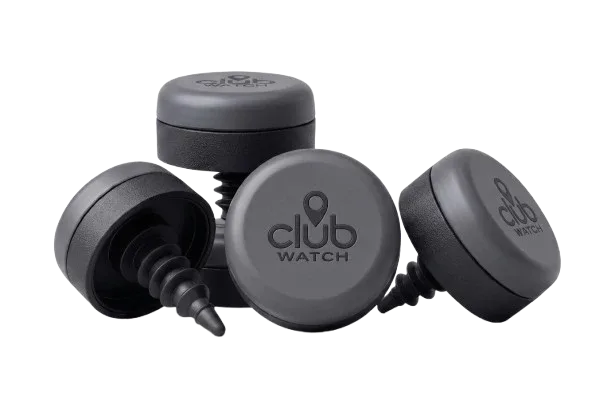
Get fitted. Try before you buy if possible. Ignore marketing noise and focus on how the clubs feel and perform. And once you've made your investment, protect it. Losing a club to absent-mindedness is one of the most preventable frustrations in golf, yet it happens constantly. Golf Club Watch Knowledge eliminates that worry with lightweight sensors that attach to your grips and alert you in real-time if you walk away without a club. No interference with your swing, no learning curve, just peace of mind.
The right irons transform your game. Protecting them transforms your experience.
What's the difference between cavity-back and blade irons?
Cavity-back irons have a hollow area on the back of the club head, with weight distributed around the perimeter. This design increases forgiveness on off-center hits and raises the moment of inertia (MOI), meaning the club head resists twisting on mishits. Blade irons are solid throughout, offering minimal forgiveness but maximum control, feedback, and shot-shaping ability. Cavity-back irons are for beginners to mid-handicappers; blades are for skilled players.
Do I really need a professional fitting?
Yes, if you're serious about your game. A fitting session costs $50-150 and evaluates your swing speed, launch angle, spin rate, and ball flight characteristics. The fitter then recommends shaft flex, lie angle, grip size, and even specific models. Most golfers who get fitted shoot better within weeks. It's one of the highest-ROI investments you can make in your golf game.
Can I mix different iron categories in my bag?
Technically yes, but it's not recommended. When manufacturers design a set, they engineer the irons to work together in terms of feel, performance transition, and forgiveness progression. Mixing a cavity-back 7-iron with a blade 4-iron creates inconsistent feedback and performance gaps. Stick with a matched set.
How do I know if I'm ready to move to a different iron category?
Monitor your consistency and ball striking. If you're hitting the sweet spot regularly and your handicap has stabilized below 10, you might be ready for Players Distance or even Blade irons. If you're still missing the center frequently or your handicap is above 14, Game Improvement irons will serve you better. Your fitter can assess this objectively based on your swing data.