

How Bluetooth Golf Trackers Improve Your Game in 2026
Bluetooth golf trackers are changing the game for recreational and serious golfers who are tired of losing clubs or wondering if they left their wedge behind. Here's the honest truth: about 70% of golfers lose at least one club every year. That's a lot of expensive equipment walking away in someone else's bag, or worse, staying lost on the course forever.
The good news? Bluetooth trackers eliminate that stress entirely. They attach lightweight sensors to your clubs, pair with your phone via an app, and give you real-time alerts if a club gets left behind. But that's just the foundation. Modern trackers like those from Golf Club Watch Knowledge are now doing way more: AI swing analysis, GPS mapping, and digital scorecards that actually help you play better. Let's break down exactly how these tools improve your game.
Related: Best Digital Handicap Tracking Golf App in 2026
In this article
- What Bluetooth Golf Trackers Actually Do
- How Bluetooth Trackers Help You Play Better Golf
- The Technology Behind the Improvement
- Why Head Stability and Lighting Matter
- Getting Started with Bluetooth Trackers
- Real-World Impact on Your Score
- Premium Features vs. Free Basics
- Why Bluetooth Trackers Beat Other Methods
- The Bottom Line: Should You Use One?
- Frequently Asked Questions
What Bluetooth Golf Trackers Actually Do
A Bluetooth golf tracker is a small sensor that clips onto your club grip. When you pair it with the free mobile app on your phone, it communicates with your device every time you swing. The system tracks which club you hit, how far it went, and—if you're using premium features—analyzes your swing mechanics in real time.
Related: Best Golf Club Finder Device Guide 2026
Here's what makes them different from old golf gadgets: they're lightweight (you won't feel them during your swing), they don't slow down your game, and the setup takes less than five minutes. Attach the sensor, open the app, tap "add club," and you're live.
The core benefit is peace of mind. You'll get an instant notification if you leave a club on the green or in the cart. No more walking back to the clubhouse wondering if your putter is still out there.
How Bluetooth Trackers Help You Play Better Golf
Preventing lost clubs is huge, but the real game improvement comes from the data these trackers collect. Here's how Bluetooth golf trackers improve your game:
Related: Best Golf Shot Trackers in 2026: Develop Your Game the Right Way
- AI Swing Analysis: The sensors capture your swing mechanics and the app compares your form to optimal techniques. You'll see if you're rotating your hips correctly, if your head position is staying stable, or if your tempo is off. This feedback happens between holes, so you can adjust before the next shot.
- Distance Tracking by Club: You get exact yardage data for every club in your bag. After a few rounds, you'll know your average 7-iron distance, your driver carry, and your wedge distances with precision. That eliminates guessing and helps you club selection dramatically.
- Pattern Recognition: AI tools spot trends you'd never catch on your own. Maybe you're consistently pulling your 6-iron left. Maybe your driver distance drops in the afternoon when you get tired. The app shows you these patterns so you can fix them at the range.
- Digital Scorecards: Track every shot, every score, every hole layout. You can review past rounds and see which courses challenge you most, which holes trip you up, and which clubs perform best on specific course types.
- GPS Course Mapping: Know exact distances to hazards, greens, and doglegs. This removes course management stress and helps you make smarter club choices.
The Technology Behind the Improvement
The real magic happens in the sensor design and the app's AI engine. Modern Bluetooth sensors are incredibly small—think grip attachment the size of a USB stick. They're powered by rechargeable batteries that last weeks between charges, so you're not replacing batteries every other round.
The AI is the game changer. According to recent research from golf technology publications, AI integration in golf tracking is recognized as a breakthrough for player development, helping golfers discover improvement strategies they couldn't identify on their own. The algorithms analyze thousands of data points from your swings and compare them to professional benchmarks and your personal baseline.
What makes Golf Club Watch Knowledge different is simplicity. You're not wading through complicated metrics or confusing dashboards. The app shows you what matters: Did I hit this club the right distance? Did I leave a club behind? What's my trend over the last ten rounds?
Why Head Stability and Lighting Matter
If you're wondering how accurate these trackers are, it comes down to two things: keeping your head still during the swing and playing in good lighting conditions.
Head stability is critical. When your head moves during the swing, the sensor on your club grip captures movement that isn't part of your actual swing mechanics. A stable head position means cleaner data and more accurate AI analysis. This is actually a huge benefit: the tracker gives you instant feedback if your head is moving too much, so you're training better form every time you swing.
Lighting also matters. Sensors perform best in daylight or well-lit ranges, and they're less accurate in direct sunlight (which can interfere with sensors) or flickering indoor lights. This isn't a deal-breaker—most golf courses have good natural lighting—but it's worth knowing if you're planning to use trackers at an indoor driving range.
Related: Are Golf Pad Tags Worth It? Honest 2026 Review
Getting Started with Bluetooth Trackers
Setup is genuinely fast. Attach a sensor to your club grip, download the app, and pair your phone via Bluetooth. The first pairing takes less than five minutes. From there, you're collecting data immediately.
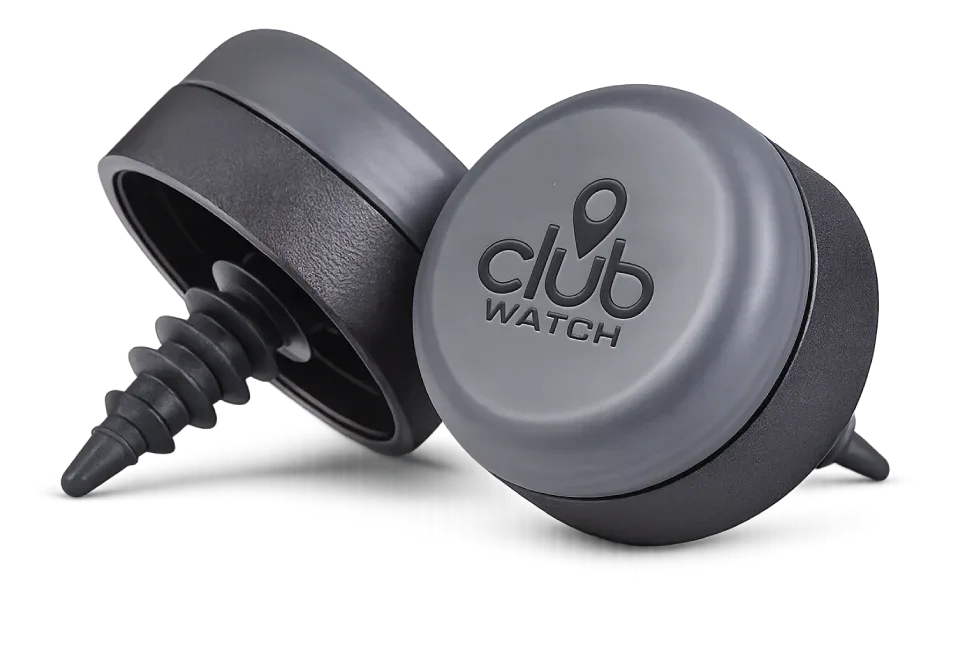
Most golfers start with their most-used clubs: putter, sand wedge, and maybe a hybrid or two. The ClubWatch 4-Pack — Protect Your Putter & Wedges covers your short game, which is where most strokes are lost. Once you see the value, you can upgrade to whole-bag coverage.
The app syncs wirelessly during your round, so there's no manual data entry. Your phone stays in your pocket, and the tracker quietly collects information in the background. After 18 holes, you get a full breakdown of your performance.
Real-World Impact on Your Score
Here's what happens in practice: after three or four rounds of data, you start seeing patterns. You realize your driver distance is actually 240 yards, not the 260 you thought. That changes how you play the course. You hit fewer layup shots. You make smarter tee decisions.
You also start noticing mechanical issues. The AI flags that your wedge swing has inconsistent tempo, or your iron shots are pulling slightly left. You spend 30 minutes at the range fixing it. Suddenly, your score drops two or three shots.
Golfers who use Bluetooth tracking systems report lower scores because they're making decisions based on real data, not assumptions. They're also less anxious—no more turning around halfway down the fairway wondering if they grabbed their 9-iron. The peace of mind alone is worth it.
Premium Features vs. Free Basics

Most Bluetooth trackers offer a free mobile app with lost-club alerts and basic distance tracking. That's genuinely valuable on its own—you get theft prevention and peace of mind.
Related: Golf Club Loss Prevention Best Practices in 2026
Premium upgrades add AI swing analysis, detailed performance metrics, and sometimes GPS integration. You're paying for deeper insights and coaching feedback. Whether it's worth it depends on how serious you are about improving. Casual players? The free version stops lost clubs. Golfers working on their handicap? The premium features will accelerate improvement.
If you're ready to try it, Golf Club Watch Knowledge offers straightforward pricing with no hidden fees. You buy the sensors upfront, download the free app, and choose whether to upgrade for premium features. No subscriptions you forget to cancel.
Why Bluetooth Trackers Beat Other Methods
You might be thinking: "Can't I just remember where my clubs are?" Sure—until you can't. You might also track clubs with rangefinders or GPS watches, but those don't give you real-time alerts if you leave equipment behind. And they definitely don't provide swing analysis.
Bluetooth trackers are the only technology that solves two problems at once: equipment loss prevention and performance improvement. They're like having a coach in your pocket who never misses what you're doing wrong.
The technology is also future-proof. Bluetooth is the industry standard, and manufacturers are investing heavily in AI integration. What you buy today will only get smarter with app updates.
The Bottom Line: Should You Use One?
If you play golf more than a few times a year and you own clubs worth protecting, a Bluetooth tracker is a no-brainer investment. You're preventing lost equipment, reducing anxiety, and collecting data that actually improves your score. The setup takes minutes, the technology is invisible during play, and the long-term value is substantial.
Start with your most-used clubs. See how it feels for a few rounds. Once you experience the peace of mind and start seeing performance trends, you'll probably expand to full-bag coverage. Most golfers who try them never go back to playing without them.
Frequently Asked Questions
Will Bluetooth trackers interfere with my swing or gameplay?
No. The sensors are designed to be lightweight and attach to your grip without affecting club balance or feel. The battery lasts weeks between charges, so there's no fussing with your equipment during rounds. After the first hole, you'll forget they're even there.
How accurate is the swing analysis?
Accuracy depends on sensor placement and lighting conditions. Keep your head stable during the swing and play in good daylight or well-lit ranges, and you'll get reliable data. The AI learns your personal baseline over time, so trends become increasingly accurate as you rack up more rounds.
Can I use Bluetooth trackers at my home course and public courses?
Yes. Since the system is purely Bluetooth between your sensors and your phone, there are no course restrictions. You can use them anywhere you play. Some courses might have coverage areas with weaker signals, but even then, your phone stores local data that syncs when you regain connection.
What if I lose a sensor?
You can purchase ClubWatch Single Sensor — Add-On & Replacement units individually. They're inexpensive compared to replacing a lost club, and the setup is instant since your app is already paired with your phone.