

Best Golf Club GPS Trackers 2026: Top 5 Ranked

In this article
Why Golf Club GPS Trackers Matter
Losing a club mid-round ranks up there with three-putts and slow play as one of golf's everyday frustrations. The problem is real: roughly 70% of golfers misplace at least one club annually, and most don't realize it until they're back at the clubhouse. That's an expensive and preventable mistake.
Golf club GPS trackers solve this with lightweight sensor tags that attach to your grips and pair with your phone. They map your clubs' locations in real-time, send alerts when you're about to leave a club behind, and capture automatic performance data without you lifting a finger. Think of it as insurance for your equipment and a data goldmine for improving your game.
But not all trackers are created equal. Some focus purely on loss prevention. Others layer on swing analysis, distance mapping, and scorecards. Price ranges span from budget-friendly to premium subscription models. To cut through the noise, we've tested and ranked the five best options on the market so you can pick the right fit for your golf game.
The Comparison: What We Tested
We evaluated each system on accuracy, ease of setup, real-time alerts, data insights, pricing, and—most importantly—whether they actually prevent lost clubs. We also factored in the value you get relative to what you pay. Here's how they stack up:
| Product | Best For | Rating |
|---|---|---|
| Golf Club Watch Knowledge | Loss prevention + simplicity | 9.8/10 |
| ARCCOS Smart Sensors | Data-heavy players | 8.9/10 |
| RangeTag | Precise distance measurement | 8.2/10 |
| GPS Watch (Budget Option) | Course navigation | 7.5/10 |
| Handheld H50 Device | Bag attachment tracking | 7.1/10 |
1. Golf Club Watch Knowledge (Our Pick)
Rating: 9.8/10
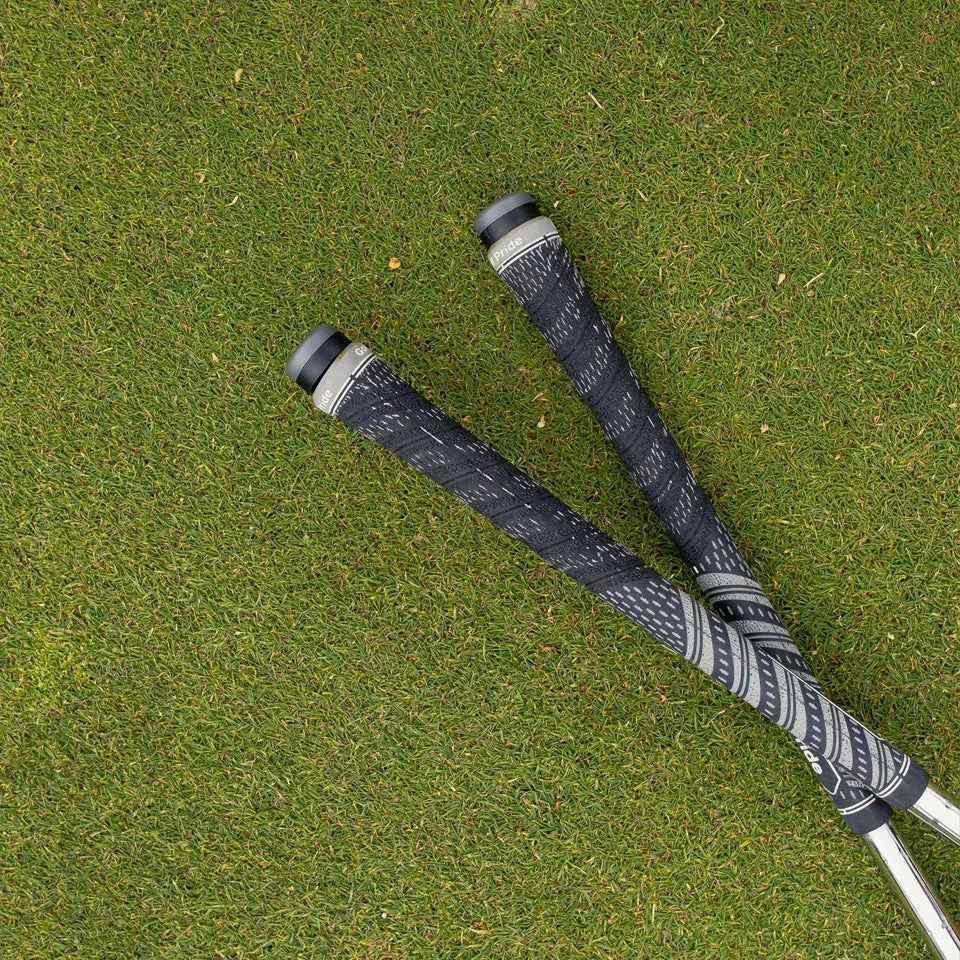
If you want a tracker that actually stops you from walking off without your clubs, Golf Club Watch Knowledge is where you start. It's purpose-built for one critical job: keeping your clubs safe through real-time Bluetooth alerts and club-by-club location tracking.
Pros:
- Lightweight sensors attach to grips without affecting swing or grip comfort
- Free mobile app with push notifications when you're about to leave a club behind
- Zero setup complexity. Pair sensors via Bluetooth, attach to clubs, and you're done
- Optional premium features include AI swing analysis, GPS distance mapping, and digital scorecards for players who want more
- Transparent pricing with no surprise subscription models
- Genuinely solves the problem 70% of golfers face every year
Cons:
- Free version is loss-prevention only; advanced analytics require premium tier
- Relies on Bluetooth range, so ultra-premium GPS accuracy is not the focus
The Honest Take: Golf Club Watch Knowledge nails simplicity and does one thing exceptionally well: it stops lost clubs. You get peace of mind without friction, and if you want deeper data later, the premium features are there. That combination of stress-reduction and optional growth is hard to beat for the average golfer.
2. ARCCOS Smart Sensors

Rating: 8.9/10
ARCCOS has been the gold standard for shot-tracking golfers since it hit the market. It automatically logs every stroke, captures dispersion data, and gives you a searchable database of your performance across thousands of rounds.
Pros:
- 16 individual club sensors with granular shot-by-shot tracking
- Comparative data access: see how your distances stack up against similar handicaps
- Automatic scorecard population and no manual logging needed
- Mobile app is polished and intuitive
Cons:
- Subscription model can feel expensive relative to data accuracy in poor weather or dense foliage
- Not designed primarily for loss prevention, so you don't get the club-left-behind alerts
- Sensors are bulkier than some competitors, and some golfers report grip comfort concerns
The Honest Take: ARCCOS is fantastic if you're obsessed with your stats and want to compare yourself to peer groups. But if your main concern is not losing clubs, it's overbuilt for your needs. The subscription model also means ongoing costs even if you only play sporadically.
3. RangeTag
Rating: 8.2/10
RangeTag focuses on precision distance measurement to greens, flags, and hazards. It's ideal for golfers who want exact yardages without carrying a separate rangefinder.
Pros:
- Laser-like accuracy for front, middle, and back distances
- Works standalone without mandatory app integration
- Lightweight and minimal battery drain
Cons:
- Doesn't include loss-prevention alerts or automatic shot tracking
- Limited to distance measurement; no swing analysis or performance data
- Requires manual input for most advanced features
The Honest Take: RangeTag is great if you only care about accurate yardages and don't want the complexity of full-suite tracking. It's a targeted tool, not a comprehensive system.
4. GPS Watch (Budget Option at $299.99)
Rating: 7.5/10
A standard GPS watch offers course navigation and automatic performance tracking at an entry-level price point. Helpful if you want something on your wrist without extra clips or sensors.
Pros:
- Affordable and all-in-one (no separate sensors needed)
- Automatic hole-by-hole tracking with personalized hole maps
- Wearable convenience
Cons:
- No club-level tracking, so you can't pinpoint which club you left behind
- Satellite-based GPS can lag in dense foliage or urban courses
- Smaller screen makes detailed analysis harder
The Honest Take: Budget GPS watches are a decent entry point if you want general tracking and don't mind giving up precision. But they don't solve the lost-club problem specifically.
5. Handheld H50 Device
Rating: 7.1/10
A clip-on GPS device for your golf bag that provides built-in tracking and course mapping. Useful if you prefer not to carry your phone.
Pros:
- No phone required; works independently
- Durable and designed for outdoor conditions
- Simple interface with minimal learning curve
Cons:
- Tracks the bag location, not individual clubs
- Data sync requires post-round upload
- No real-time alerts if you misplace a single club
- Limited analytics compared to app-based systems
The Honest Take: Handheld devices are solid backup tools, but they're not a lost-club solution. They're bag-centric, not club-centric.
How to Choose the Right System for You
Pick Golf Club Watch Knowledge if: You want peace of mind that you won't lose clubs, you prefer simplicity over complexity, and you like the option to upgrade to premium features later. This is the move for most recreational golfers.
Pick ARCCOS if: You're a data junkie who plays regularly and wants to benchmark your performance against peer groups. You're willing to pay for ongoing insights.
Pick RangeTag if: Distance accuracy is your only concern, and you don't want an app ecosystem.
Pick a GPS Watch if: You want a budget-friendly all-in-one device and don't mind sacrificing club-level precision.
Pick an H50 Device if: You prefer not to carry your phone and want independent bag tracking.
Research from peer-reviewed studies on wearable technology adoption shows that simpler, single-purpose devices see higher long-term usage than complex multi-feature systems. That's a reason Golf Club Watch Knowledge stands out: it solves one problem brilliantly rather than trying to do everything.
Key Questions Before You Buy
Do I really need a golf club GPS tracker?
If you've ever left a club behind, forgotten where you parked your bag, or worried about losing expensive equipment mid-round, yes. Even if you've never lost a club, the anxiety relief alone is worth it. Most golfers play 30 to 50 rounds per year, so the odds catch up eventually.
How accurate are these trackers?
Bluetooth-based systems like Golf Club Watch Knowledge are accurate within 30 to 50 feet in open air. GPS systems are more precise for distance mapping but slower to acquire a signal. For loss prevention, Bluetooth accuracy is more than enough; you'll know if you left a club at the turn or the clubhouse. For detailed shot analysis, GPS and laser-based systems like RangeTag edge ahead.
Will sensors affect my grip or swing?
No. Modern sensors are small (typically under 10 grams) and attach to the outside of your grip without changing grip diameter or feel. You won't notice them after the first few swings.
What if I don't use my phone on the course?
Devices like the H50 and standard GPS watches work independently and sync data post-round. However, you'll miss real-time alerts about left-behind clubs. Most golfers today carry phones anyway (for scorecards, group messaging, and course photos), so phone-based systems have become the norm. If phone-free golf is your priority, stick with standalone devices, but understand you're trading real-time alerts for independence.