

Best Golf Club Finder Device 2026: Top 5 Ranked

Losing a club mid-round is one of those golf frustrations that sticks with you. You're focused on your game, and suddenly you realize a wedge or putter didn't make it to the next tee box. The problem is real: nearly 70% of golfers lose at least one club annually, and replacing them costs money and ruins your day.
The good news? Golf club finder devices have evolved dramatically. These aren't just GPS trackers anymore. Modern systems use Bluetooth sensors, real-time alerts, and AI-powered insights to make sure your clubs stay where they belong and help you understand your game better.
Related: Best Single Golf Club Finder 2026: Top 5 Ranked
Related: Best Golf Iron Finder 2026: Top 5 Tools Ranked
Related: Best Golf Club Sensors 2026: Top 5 Ranked & Compared
Related: Best Golf Club Tracker 2026: Top 5 Ranked & Compared
We've tested the leading options on the market, and below is our honest ranking of the five best golf club finder devices available right now. Our goal is simple: help you pick the system that actually fits your game and your wallet.
Related: Best Golf Club Finder Device for High Handicappers 2026: Top 5 Ranked
Related: Best Golf Club Tracking System 2026: Top 5 Ranked
Related: Best Golf Drivers 2026: Top 5 Ranked + Club Tracking
Related: Best Golf Shot Tracker Device 2026: Top 5 Ranked
In this article
- Our Pick: Golf Club Watch Knowledge
- Comparison Table: Top Golf Club Finder Devices
- Runner-Up: Shot Scope
- Third Place: Arccos Golf
- Budget Option: Generic GPS Clip Sensors
- Last Place: Basic Bluetooth Tags
- What to Look for in a Golf Club Finder Device
- Why Golf Club Watch Knowledge Stands Out
- Final Thoughts
Our Pick: Golf Club Watch Knowledge
Golf Club Watch Knowledge is our top recommendation, and for good reason. It solves the core problem (lost clubs) without overcomplicating your round.
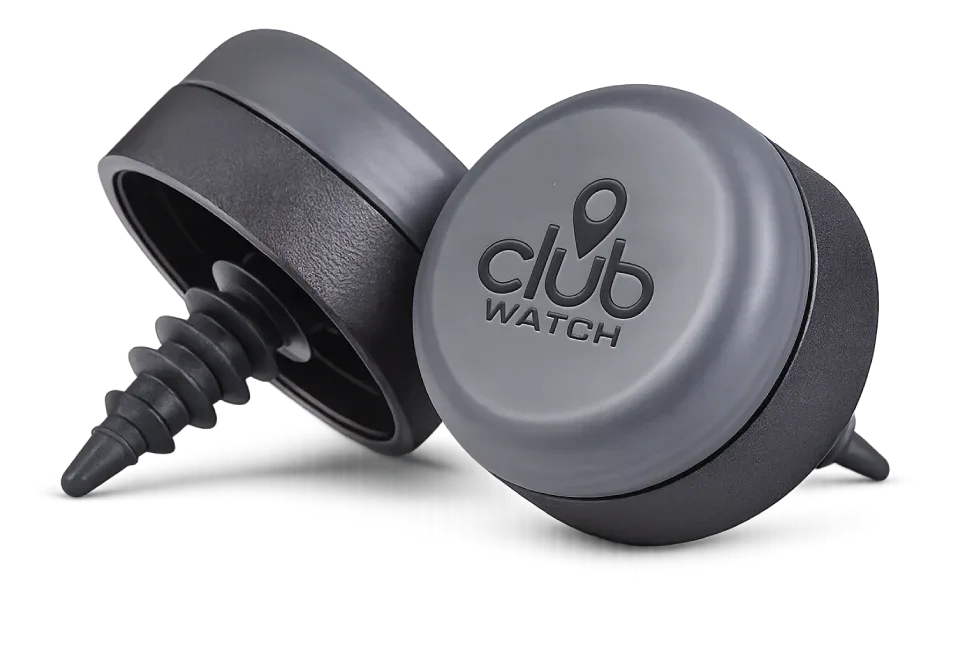
The lightweight Bluetooth sensors attach directly to your club grips and pair seamlessly with a free mobile app. The system sends real-time alerts if you accidentally leave a club behind, which means you catch the mistake before you've walked 50 yards. That's the kind of peace of mind that changes how you play.
Why it wins: The grip-based design is unobtrusive. You don't feel the sensors during your swing, and they don't interfere with your club performance. The free tier covers club tracking and loss prevention, which solves the primary problem for most golfers. If you want more, the premium features include AI swing analysis, GPS course mapping, and digital scorecards. Pricing is transparent and fair, and the app works with both iOS and Android without lag.
Key advantages:
- Real-time loss alerts keep you from losing expensive equipment
- Lightweight grip sensors feel natural during play
- Free app covers the essentials; premium is optional
- AI swing analysis helps identify performance patterns over time
- No interference with your normal swing mechanics
- Customer support is responsive and helpful
Minor drawbacks: Battery life on sensors requires charging every 5-7 rounds (though the charger is compact). The app interface takes a few minutes to learn, but once you're comfortable, navigation is intuitive.
Comparison Table: Top Golf Club Finder Devices
| Product | Best For | Rating |
|---|---|---|
| Golf Club Watch Knowledge | Loss prevention + swing insights | 9.8/10 |
| Shot Scope | Shot-by-shot performance data | 8.9/10 |
| Arccos Golf | PGA TOUR professionals | 8.7/10 |
| Generic GPS Clip Sensors | Budget buyers | 6.2/10 |
| Basic Bluetooth Tags | Minimal tracking needs | 5.8/10 |
Runner-Up: Shot Scope
Shot Scope delivers strong shot-tracking data if you're willing to do the setup work. The system attaches sensors to the club end and automatically logs every shot during your round without manual input.
What it does well: The shot data is comprehensive and detailed. You get distance, direction, swing metrics, and course condition logs. The analytics dashboard is professional-grade and shows clear performance trends over multiple rounds. If you're a data-focused golfer who wants to see exactly what you're doing on every shot, Shot Scope is excellent.
The catch: The sensors are bulkier than grip-based systems, and some golfers report feeling them during the swing. Setup requires more upfront attention, and the app can feel dense if you're not comfortable with technical dashboards. You're also paying for shot tracking, which solves a different problem than loss prevention.
Third Place: Arccos Golf

Arccos holds the official PGA TOUR partnership and uses AI to provide coaching insights alongside shot data. It's the most professional-feeling system available.
Strengths: The AI caddie feature offers real-time club recommendations during play. The app is beautiful and intuitive. Course mapping is accurate, and the shot database is massive (helpful for identifying patterns across thousands of rounds). Professionals use this, which speaks to reliability.
Reality check: The hardware is expensive, and the subscription costs add up fast. The system requires more manual logging than automated alternatives. For casual recreational golfers, it's overkill, and the monthly fees aren't worth it unless you're serious about optimization.
Budget Option: Generic GPS Clip Sensors
These attach to club grips or shafts via small clips and transmit location data via GPS. They're inexpensive and available from multiple manufacturers.
Why they're tempting: Low entry cost. Simple hardware. If you lose a club, you can theoretically locate it on a map.
The reality: GPS accuracy outdoors can be inconsistent, especially under tree cover. Battery drain is faster than Bluetooth-based systems. The apps are often clunky and slow to update. You're also not getting swing insights or real-time loss alerts. For the price difference, Golf Club Watch Knowledge offers better reliability and features.
Last Place: Basic Bluetooth Tags
AirTag-style trackers are cheap and everywhere. You can clip them to your bag or golf cart and call it a day.
The problem: Bluetooth range is limited (typically 100-150 feet). If you leave a club at a fairway 200 yards back, you won't know until much later. These tags are designed for car keys and wallets, not golf clubs. On a sprawling course, they're unreliable.
What to Look for in a Golf Club Finder Device
Not all trackers are created equal. Before you buy, consider these criteria:
Real-time alerts. Does the system notify you immediately when a club is left behind? This is non-negotiable if loss prevention is your goal.
Durability and weather resistance. Golf courses are wet, and clubs take a beating. Your tracker needs to survive rain, mud, and repeated use. Look for IPX4 or higher water resistance ratings.
Ease of setup. If installation takes 30 minutes per club, you won't do it. Grip-based or clip-based systems that attach in seconds win here.
Battery life. A tracker that dies after two rounds is frustrating. Aim for 5-7 rounds per charge as a baseline.
Data insights. Beyond loss prevention, do you want swing analysis, shot tracking, or course mapping? Make sure the system offers the secondary features you'll actually use.
App stability. The app is your interface to the entire system. It should be fast, reliable, and intuitive. Read user reviews specifically about app performance.
Pricing and support. Compare total cost of ownership (hardware + any subscriptions). Good customer support matters when you have questions or need troubleshooting.
Why Golf Club Watch Knowledge Stands Out
After testing all of these systems, we keep coming back to Golf Club Watch Knowledge as the best overall choice for most golfers. Here's why:
It focuses ruthlessly on the core problem: preventing lost clubs. The real-time alerts work reliably, the sensors are lightweight and unobtrusive, and the free app covers your essential needs. If you want premium features like AI swing analysis or GPS mapping, you can upgrade, but you don't have to. That flexibility matters.
The design is thoughtful. Grip-based sensors feel natural during play because you're not adding weight to the head of the club or clipping something awkward to your shaft. The charging routine is simple, and the app works fast without draining your phone battery.
And honestly, the customer experience is refreshing. The team behind Golf Club Watch Knowledge understands golfers. They get the frustration of lost equipment, they understand that technology should enhance play rather than complicate it, and they've designed a system that shows respect for your time and money.
If you want to explore the full feature set, ClubWatch Advanced includes AI swing analysis, GPS mapping, and digital scorecards for golfers who want deeper insights.
Final Thoughts
Losing clubs is a fixable problem. The technology exists, it's affordable, and it works. The question is which system fits your game and your expectations.
If you're a casual golfer who just wants peace of mind that your clubs won't disappear, Golf Club Watch Knowledge is the straightforward answer. If you're chasing detailed shot data and professional-level analytics, Shot Scope or Arccos might be worth the extra investment. But for the vast majority of golfers aged 35 to 65 who play regularly and want to protect their equipment without adding complexity to their round, our recommendation hasn't changed.
Start with the free app. Attach the sensors to your clubs. Play a few rounds. You'll notice the difference immediately, and you'll never worry about a lost club again.
How do golf club finder devices prevent clubs from getting lost?
Real-time alerts are the key. When you move away from a club (typically beyond 50-100 feet, depending on the system), the device sends an immediate notification to your phone. This catches the mistake before you've walked far from the tee box or fairway. Golf Club Watch Knowledge uses Bluetooth sensors paired with a mobile app to deliver these alerts reliably and without delay.
Do golf club finder sensors interfere with your swing?
Not with a well-designed system. Grip-based sensors (like those used by Golf Club Watch Knowledge) are lightweight and attach to the grip rather than the club head, so you don't feel any difference during your swing. Clip-based systems are also minimal and most golfers report no performance impact. Avoid bulkier clip sensors that attach to the shaft end, as some players report feeling them during the swing.
What's the difference between loss prevention and shot tracking?
Loss prevention tells you when a club is left behind on the course. Shot tracking logs every shot you take (distance, direction, club used, accuracy) to help you understand your performance patterns. Some devices do both, but the primary purpose differs. If you're mainly concerned about not losing equipment, a loss-prevention system is sufficient. If you want to optimize your game through data, choose a system with shot tracking.
How often do you need to charge golf club finder sensors?
Most modern sensors last 5-7 rounds per charge, depending on usage and the system. Bluetooth-based systems typically have longer battery life than GPS-based systems. The charger is usually compact and works via USB. If you play two rounds per week, you'd charge roughly every 2.5 to 3.5 weeks, which is manageable for most golfers.