

Why Golf Tags? Real Reasons Golfers Use Them in 2026
Golf tags are lightweight sensors that attach to your clubs and send real-time alerts to your phone if you leave a club behind on the course. But that's just the headline. The deeper reason golfers use tags is simple: they solve one of the most annoying problems in the sport—losing clubs and worrying about your equipment all round long.
Let's break down why golf tags matter, how they actually work, and whether they're worth adding to your bag.
Related: Best Golf Tags Reddit: What Golfers Really Say in 2026
In this article
- Why Golf Tags Exist: The Problem They Solve
- The Core Functions of Golf Tags
- Who Should Actually Use Golf Tags?
- How Golf Tags Actually Work on the Course
- The Analytics Side: Turning Tag Data Into Game Improvement
- Why Golfers Choose Tags Over Other Solutions
- Getting Started With Golf Tags
- The Real Value of Peace of Mind
- People Also Ask
Why Golf Tags Exist: The Problem They Solve
Here's the stat that matters: roughly 70% of golfers lose at least one club every year. That's not a small number. It's a massive, widespread headache that affects casual players and serious golfers alike.
Losing a club is frustrating for three reasons. First, there's the immediate frustration of realizing you left your putter or 7-iron somewhere back on hole 12. Second, there's the hassle of either going back to look for it or contacting the pro shop hours later. Third, there's the real financial hit—a good club costs $100 to $300, and losing multiple clubs in a season adds up fast.
Golf tags were created to eliminate that anxiety. They're your safety net for equipment. Instead of worrying the entire back nine, you get an instant notification on your phone the moment you walk away from a club. Problem solved before you even leave the green.
The Core Functions of Golf Tags
Golf tags do two main things, and understanding both will help you decide if they're right for your game.
1. Real-Time Equipment Tracking
This is the headline feature. Each tag uses Bluetooth technology to stay connected to your phone within a specific range (usually 30-100 feet depending on the tag). If you walk away from your golf bag or leave a club on the green, your phone alerts you immediately.
The alert doesn't wait for you to get home and discover it's missing. It happens right there on the course, when you can still walk back and grab it. That's game-changing peace of mind.
2. Performance Data Capture
Beyond just tracking location, modern golf tags integrate with mobile apps to capture shot data. Your tags can record how far each club traveled, where your shots landed, and patterns across your round. This information feeds into analytics that help you understand your game better.
You get insights like which clubs are consistent for you, where your dispersion patterns show weaknesses, and how your performance compares over multiple rounds. It's like having a quiet coach following you around, collecting objective data instead of relying on your memory.
Who Should Actually Use Golf Tags?
Golf tags aren't for everyone, but they're perfect for a specific group of golfers.
Related: Do You Need a Subscription for Golf Pad Tags? The Real Answer
Related: Do Golfers Actually Use Golf Pad Tags? Reddit Real Talk
If you regularly play courses and have invested serious money in your clubs, tags are a no-brainer. You're protecting an asset. If you play competitively or want to track your improvement over time, tags give you that data automatically without extra effort.
You should also consider tags if you've lost a club before (most of us have) or if you know yourself—you're the type who forgets your phone or leaves your putter leaning against a tree. If that's you, a tag is much cheaper than replacing a club.
The good news is that Golf Club Watch Knowledge has designed their system to work for golfers at all levels. You don't need to be a tech expert or a pro to benefit from them. The setup takes minutes, and the app is straightforward.
How Golf Tags Actually Work on the Course

The mechanics are simple, which is why they're so effective.
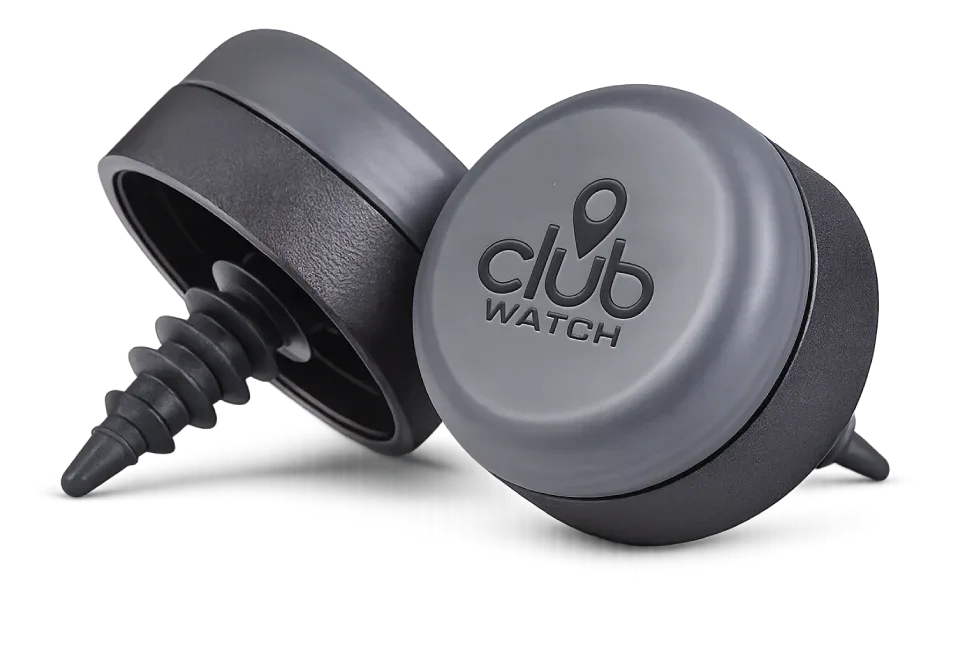
You attach a lightweight sensor to each club grip. The sensor is small enough that you won't notice it during your swing, but it's designed to be durable through a full season of play. You pair the sensors with your phone via a free mobile app.
As you play, the app tracks which clubs you're using and where you are on the course. The moment you walk away from a club—whether you left it on the green, in the rough, or by the cart—your phone sends you an instant notification.
Some tag systems also include GPS location mapping, so you can see exactly where on the course you left it. This is especially useful on large, sprawling courses where you might not remember which green you played from five holes ago.
The entire system runs on your phone. There's no separate device to carry, no complicated syncing, and no interference with your actual golf swing. It just works quietly in the background.
The Analytics Side: Turning Tag Data Into Game Improvement
Beyond loss prevention, golf tags capture performance metrics that most casual golfers never track.
Related: AI Golf Swing Improvement App: Real Results in 2026
Each time you hit a shot with a tagged club, the system records the distance and angle of your stroke. Over a full round or a season, patterns emerge. You'll see which clubs are your most consistent, where your distances vary, and which parts of your game need work.
According to Golf Channel's reporting on golf technology trends, golfers who use performance tracking systems improve their scores faster than those who rely on feel alone. The data removes guesswork and lets you focus your practice time on what actually matters.
Premium versions of tag systems also offer AI-powered swing analysis. That's a nice bonus if you're serious about improvement, but the core value—preventing lost clubs and capturing shot data—is what matters for most players.
Why Golfers Choose Tags Over Other Solutions
Some people ask: "Why not just be more careful?" Fair question, but here's the honest answer: golf is a sport where you're focused on your shot, the wind, the green, and a dozen other things. Your clubs are the last thing on your mind. That's not laziness; that's the nature of the sport.
Other solutions like golf bag organizers or club dividers help with organization, but they don't prevent loss. Tags are the only system that actively watches your equipment for you.
That's why more and more golfers are making the switch. It's not a luxury—it's protection for your investment and your sanity on the course.
Getting Started With Golf Tags

If you're ready to stop losing clubs, here's what to know about getting started.
Most tag systems let you choose how many sensors to buy based on your needs. If you want to protect just your most expensive clubs—your putter and wedges—start small. If you want full-bag coverage, go for a larger set.
The ClubWatch 4-Pack — Protect Your Putter & Wedges is a smart starting point for golfers who want to protect their most-used clubs without a huge upfront investment. If you decide you love the system and want to track every club, the ClubWatch 13-Pack — Whole-Bag Coverage, Best Value gives you complete peace of mind across your entire set.
Setup is quick. You attach the sensors to your grips, download the app, and you're ready to play. The sensors are battery-powered and last through multiple seasons with normal use.
If you already have tags and want to add coverage for new clubs or replace a sensor, the ClubWatch Single Sensor — Add-On & Replacement keeps your system flexible as your needs change.
The Real Value of Peace of Mind
Here's what most golfers don't talk about: the emotional benefit.
When you know your clubs are being watched, you play better. You're not distracted by worry. You're not doing a mental inventory on every green. You're just golfing. That mental freedom is worth something real, especially if you play regularly and care about your equipment.
Golf is supposed to be relaxing and fun. Losing clubs ruins that. Tags bring it back.
Whether you're protecting a $300 putter or simply want to eliminate the stress of losing equipment, golf tags solve a real problem that affects the majority of golfers. They're lightweight, they work quietly in the background, and they give you something you can't buy any other way: real peace of mind on every round.
If you're interested in learning more about how tag systems work and which setup is right for your game, Golf Club Watch Knowledge has detailed guides and real reviews from golfers like you.
People Also Ask
Do golf tags slow down your swing?
No. Golf tags are specifically engineered to be lightweight and compact. They attach to your grip without adding noticeable weight or changing the feel of your club. You won't think about them during play, and they won't affect your swing mechanics.
How long do golf tag batteries last?
Most modern golf tag systems have batteries that last a full season of regular play—typically 6 to 12 months depending on usage and the specific system. When the battery gets low, the app alerts you so you can replace it. Replacement batteries are inexpensive and easy to swap out yourself.
Can you use golf tags indoors or at the driving range?
Yes. While golf tags are primarily designed for course play, the Bluetooth tracking works anywhere as long as your phone is nearby. Some golfers use them at the range to capture distance and shot data during practice sessions. It's a bonus feature if your system supports it.
What happens if your phone battery dies during a round?
If your phone dies, the tags continue to store data locally, and the tracking information syncs to the app once you recharge and reconnect. You won't get real-time alerts while your phone is off, so you'll need to be more vigilant on the back nine—but the data is safe and will sync automatically when you're back online.