

How Do Golf Pad Tags Work? The Complete Guide
Golf pad tags use NFC (Near Field Communication) technology to record your shot data the moment you tap your phone to the tag. Each tag contains a unique radio token that transmits location and shot information to your Golf Pad app, giving you a digital record of every swing you take on the course. It's simple, reliable, and works without needing your phone to be in your hand the whole time.
If you're curious about how this all works and whether it's the right solution for tracking your clubs, you're in the right place. Let's dig into the specifics.
In this article
- How Golf Pad Tags Actually Work
- The Manual Tap Workflow: Why It Actually Works Better Than You Think
- What Data Do Golf Pad Tags Capture?
- Golf Pad Tags vs. Automatic Tracking Systems
- Why NFC Technology Is Perfect for Golf
- How to Set Up and Use Golf Pad Tags on Your Round
- Key Advantages of the Golf Pad Tag System
- Comparing Your Club Tracking Options
- The Bottom Line on Golf Pad Tags
- People Also Ask
How Golf Pad Tags Actually Work
Here's the straightforward process:
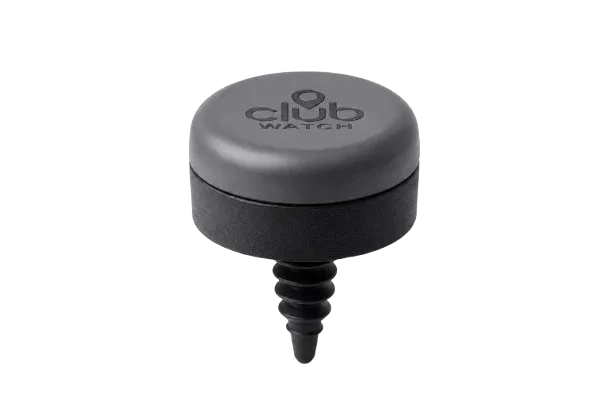
When you tap your phone (with the Golf Pad app open) directly to the NFC tag attached to your club or golf bag, the tag transmits a unique code to your phone. That code triggers the app to immediately record the GPS position where you tapped, along with shot data like distance and direction.
The tag itself doesn't have a battery or power source. It's powered passively by the electromagnetic field your phone creates when it gets close. This is why the technology is so durable and why the tags don't need charging.
Once your phone receives the signal, the Golf Pad app logs:
- Your exact GPS location (where you took the shot)
- The club you're using (based on which tag you tapped)
- Shot distance and dispersion data
- Your score for that hole
Over a full round, this builds a complete digital scorecard with pinpoint accuracy. The system maintains a 98% reliability rate for shot detection, which is solid enough that you can trust the data you're reviewing after your round.
Related: Do Golf Pad Tags Work? Honest Review for 2026
Related: How Do Golf Tags Work? The Complete 2026 Guide
Related: How Do Golf Club Tags Work? A Complete Guide
Related: How to Set Up Golf Pad Tags on iPhone: Step-by-Step Guide
The Manual Tap Workflow: Why It Actually Works Better Than You Think
One thing that surprises new users is that golf pad tags aren't fully automatic. You have to deliberately tap your phone to the tag after each shot. Some people think that's a drawback, but it's actually one of the system's biggest strengths.
Unlike wearable sensors that try to detect motion automatically (which can misfire on practice swings or get confused on the range), the manual tap method means you're in control. You decide exactly when a shot counts. No accidental logging. No false positives.
Here's how a typical round looks:
- Before your round, fully charge your phone (this is important for staying connected all 18 holes)
- Open the Golf Pad app and tap "Start scanning" on your scorecard
- After each shot, perform a quick, deliberate tap of your phone to the appropriate tag
- The app instantly records your location and shot data
- Move on. No disruption to your game flow.
You can keep your phone in your pocket most of the time. The only moment you pull it out is for the quick tap. This is way less intrusive than constantly checking a GPS device or a wearable that's pinging every few seconds.
What Data Do Golf Pad Tags Capture?
The real value of golf pad tags isn't just that they work. It's the detailed information they give you after your round.
Each tap records:
- Shot location: Precise GPS coordinates of where you hit from (down to a few feet)
- Shot distance: How far the ball traveled, calculated from your location and landing spot
- Dispersion patterns: A visual map showing where your shots tend to land with each club
- Club performance: Average distances by club, helping you understand your real yardages (not the ones you think you have)
- Putting stats: Number of putts per hole and putting consistency over time
This data is way more useful than just knowing your score. You can see exactly which clubs are performing well and which ones need attention. You can spot patterns in your misses. Golf Club Watch Knowledge understands that golfers want to improve, and data-driven insights are how you actually get better instead of just hoping.
Golf Pad Tags vs. Automatic Tracking Systems
You've probably heard of other golf tracking systems that claim to work completely hands-free. Here's the honest difference:
Automatic phone-in-pocket systems (like some competitor platforms) try to detect your swing through motion sensors and phone accelerometers. The theory is solid: keep your phone in your pocket and it figures out when you hit a shot.
In practice, this creates problems:
- The system can't tell the difference between a practice swing and a real shot
- Walking to the ball might trigger a false detection
- Inconsistent detection rates, especially with different swing speeds
- More battery drain on your phone
Golf pad tags take a different approach. You're the one deciding when a shot happened. You tap. The app records. No ambiguity. No false positives. This trade-off (manual tapping instead of automatic detection) gives you higher reliability and better accuracy.
That's why the 98% reliability rate matters. You're getting data you can actually trust.
Why NFC Technology Is Perfect for Golf
NFC was designed for quick, close-range wireless communication. It's the same tech that powers contactless payments on your credit card and phone.
For golf, it's ideal because:
- No battery required: Tags work passively, powered by your phone's radio field
- Instant response: No pairing delays or connection issues
- Tap range: Works reliably within a few inches (close enough that you can tap quickly)
- Durability: No moving parts or power management means tags last for years
- No interference: The course's radio environment doesn't affect performance
This is why golf pad tags are so much simpler than Bluetooth sensors or GPS wearables. You're not fighting with connection issues or battery anxiety. You tap, it works.
How to Set Up and Use Golf Pad Tags on Your Round
Getting started is straightforward:
- Download the Golf Pad app on your smartphone and create an account
- Purchase or attach your NFC tags to your clubs or bag (usually placed near the grip for easy tapping)
- Register each tag in the app and assign it to the correct club
- Before your round: Fully charge your phone and open the app
- Tap "Start scanning" on your scorecard
- After each shot: Perform one deliberate tap of your phone to the tag
- After 18 holes: Review your scorecard, shot data, and statistics
The whole process takes seconds per shot. Most golfers say they get used to it by hole 3 and barely think about it after that.
If you're worried about losing clubs on the course, golf pad tags give you the peace of mind that every club is accounted for. But if you want real-time alerts when a club goes missing and automated tracking without manual tapping, Golf Club Watch Knowledge offers a different approach worth exploring.
Key Advantages of the Golf Pad Tag System
Here's why golfers choose this method:
- Simple and reliable: No pairing, no syncing, no connection drops. You tap and it works.
- Complete shot history: Every round is fully documented with GPS data and statistics
- Real performance insights: You get actual distance data instead of guessing
- Shot consistency tracking: See your dispersion patterns and identify weaknesses
- Non-intrusive: Doesn't disrupt your swing or round rhythm
- Long-lasting: Tags have no battery, so they work for years
The downside is the manual tapping. If you want completely hands-free, automatic tracking, this might not be your first choice. But if you value accuracy and reliability, the tap method is worth the minor inconvenience.
Comparing Your Club Tracking Options
Golf pad tags are one approach to tracking your game, but there are other solutions depending on what matters most to you:
GPS Range Finders: Handheld devices that give you yardage to the pin. They don't track shots after the round, but they help you club selection in real time.
Wearable Sensors: Attached to your wrist or glove to detect swing motion. They claim hands-free operation, but false detections are common on practice ranges.
Bluetooth Club Sensors: Pair with your phone via Bluetooth and attempt automatic swing detection. These require charging and can have connectivity issues.
Golf Pad NFC Tags: Manual tap system with the highest reliability and zero battery maintenance.
According to research on sports technology adoption, golfers prefer systems that don't interfere with their natural swing and provide accurate post-round analysis. Golf pad tags check both boxes.
If you're looking for something that combines automatic club detection with real-time lost-club alerts and doesn't rely on manual tapping, you might want to explore other solutions as well. The key is finding what fits your game and your priorities.
The Bottom Line on Golf Pad Tags
Golf pad tags work through NFC technology that records your exact GPS location and shot data when you tap your phone to a passive tag on your club. The system is reliable, requires no batteries, and gives you detailed performance statistics after every round.
The trade-off is simple: you have to manually tap after each shot instead of relying on automatic detection. For most golfers, that's a fair deal in exchange for accuracy and simplicity.
If you're serious about improving your game through data, golf pad tags deliver the information you need. And if you want to make sure you never leave a club behind on the course, combining this kind of shot tracking with real-time club monitoring creates a complete system.
People Also Ask
Can golf pad tags work without internet on the course?
Golf Pad tags use NFC, which works locally between your phone and the tag without needing an internet connection. However, to sync and review your full shot data after the round, you'll need to connect to WiFi or mobile data. The app will cache your round data and upload it once you're connected.
How far away does your phone need to be from a golf pad tag?
NFC tags work reliably within 2-4 inches. You'll need to perform a deliberate tap, bringing your phone close to the tag. This close-range requirement is actually a feature, not a bug, because it prevents accidental taps from distance.
Do golf pad tags work with iPhone and Android equally?
Yes. NFC technology works on all modern iPhones (iPhone 7 and newer) and most Android phones. The Golf Pad app is available on both platforms and functions identically.
What happens if your phone dies during a round?
If your battery runs out mid-round, your shot data won't be recorded from that point forward. This is why it's important to fully charge your phone before playing. Some golfers carry a portable charger as backup, especially on full 18-hole rounds.