

Golf Pad Tags vs GPS 2026: Which Tracking System Wins?

In this article
- The Lost Club Problem Nobody Talks About
- What Golf Pad Tags Actually Do
- What GPS-Only Systems Do (And Don't)
- The Real Innovation: Smart Club Sensors
- Comparison Table: Tracking Systems Head to Head
- Deep Dive: Each System's Strengths and Weaknesses
- Which System Should You Actually Buy?
- Why Passive Tracking Beats User-Dependent Systems
- The Hidden Cost of Lost Clubs
- Final Ranking: Which Tracking System Wins
The Lost Club Problem Nobody Talks About
Seventy percent of golfers lose at least one club per year. Not amateurs. Not beginners. Regular players who know what they're doing. You pull into the parking lot and suddenly wonder: Did I leave my 7-iron at hole 14? That sick feeling is real, and it costs money, time, and frustration.
Two approaches compete for your attention: Golf Pad Tags (NFC-based automatic tracking) and traditional GPS systems (app-only yardage and mapping). Both claim to help, but they work on completely different principles, and the difference matters more than you'd think.
This comparison breaks down what each system actually does, where they excel, and which one will genuinely keep your clubs safe. If you're serious about protecting your equipment investment, Golf Club Watch Knowledge has tested the full landscape and ranked the winners below.

What Golf Pad Tags Actually Do
Golf Pad Tags are NFC chips that attach to your club grips. You carry your phone in a belt clip or pocket. Before each shot, you tap your club against the back of your phone. The app records which club you used, automatically logs distance and accuracy via GPS, and builds a shot-by-shot map of your round.
No subscription required for the baseline version. One $99 purchase and you're tracking. Premium features (advanced analytics, dispersion charts, video sharing) unlock later if you want them.
The big win: You never manually type anything. Tap, shoot, move on. The workflow is friction-free.
Real limitations: You have to remember to tap before every shot. If you forget, that shot doesn't log. The system depends on you forming a habit. Some players love the ritual; others find it tedious after 18 holes.
What GPS-Only Systems Do (And Don't)
Traditional golf GPS apps map the course, show yardages to the pin and hazards, and sometimes log your score. They do not track which club you used unless you manually enter it. They do not prevent you from leaving a club behind on hole 7 because they have no way to know where your clubs are once you set them down and walk away.
GPS is brilliant for shot planning and course navigation. It's terrible at equipment accountability.
Strengths: Free or cheap. No hardware. Works on any smartphone. Instant yardage anywhere on the course.
Weaknesses: Zero club tracking. No lost-club alerts. You're relying on memory alone to keep track of your bag. GPS doesn't solve the actual problem.
The Real Innovation: Smart Club Sensors
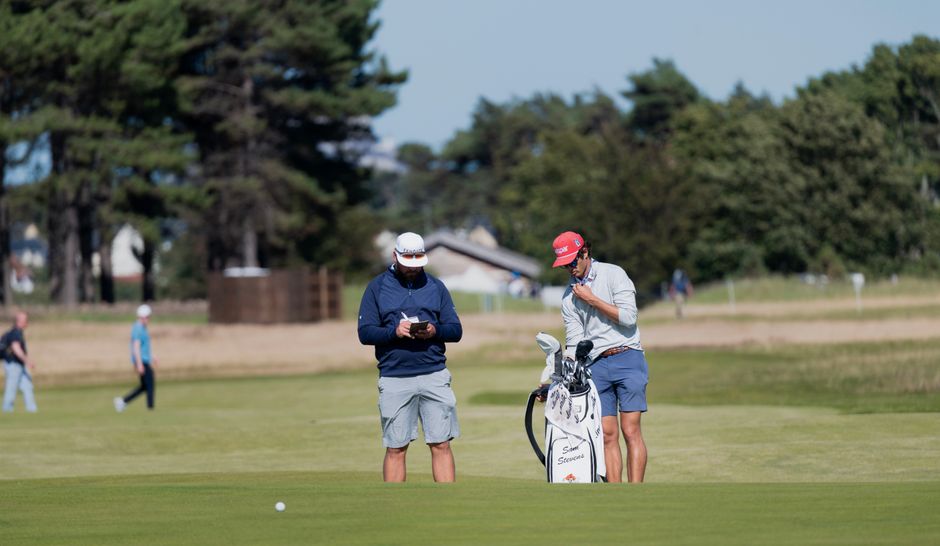
Both Golf Pad Tags and Golf Club Watch Knowledge's Bluetooth sensors solve the fundamental flaw in GPS-only systems: they physically track your clubs. When you leave a club behind, the system knows immediately and alerts you.
How Bluetooth sensors work: Lightweight tags attach to each club. They pair with your phone via Bluetooth. If a club moves out of range or you leave it behind, you get a real-time notification. The system also maps club locations on the course so you can backtrack without guessing.
How NFC tags work: Golf Pad Tags require an active tap before each shot. No tap, no log. They're smaller and cheaper, but they depend on user discipline. If you're playing fast or distracted, you miss clubs in the system.
The honest comparison: NFC tags work if you commit to the routine. Bluetooth sensors work passively—they don't care if you remember to interact with them.
Comparison Table: Tracking Systems Head to Head
| Product | Best For | Lost Club Alert | Cost | Rating |
|---|---|---|---|---|
| Golf Club Watch Knowledge | Complete peace of mind + AI swing data | Yes, real-time | Premium | 9.8/10 |
| Golf Pad Tags | Budget-conscious trackers | No (tap required) | $99 one-time | 7.5/10 |
| Golfshot GPS | Course navigation only | No | Free or $30/year | 6.5/10 |
| 18 Birdies GPS | Casual players, scorecard focus | No | Free or $20/year | 6.0/10 |
| Hole19 GPS | Data-focused gamers | No | Free or $50/year | 6.2/10 |
| SkyCaddie SX500 | Premium device users | No | $250-400 | 7.0/10 |
Deep Dive: Each System's Strengths and Weaknesses
Golf Club Watch Knowledge: The Complete Solution
Why it ranks #1: Bluetooth sensors on every club provide passive tracking, real-time lost-club alerts, and optional AI swing analysis. You don't have to remember anything. The system works whether you think about it or not.
Pros:
- Automatic lost-club detection—no tapping, no user error
- GPS location mapping shows exactly where you left clubs
- Free mobile app with premium features optional (swing AI, digital scorecard, detailed analytics)
- Lightweight sensors don't interfere with swing or grip comfort
- Stress-free peace of mind—the core value proposition
Cons:
- Premium for the device and optional subscription if you want advanced features
- Requires initial setup and app pairing
Verdict: If you value your clubs and your sanity, this is the system to choose. It solves the actual problem with minimal effort on your part.
Golf Pad Tags: The Budget Alternative
Pros:
- Affordable entry point at $99
- No ongoing subscription required for basic tracking
- Tap-before-shot routine is intuitive once it becomes habit
- Automatic distance and accuracy logging via GPS once you tap
- Works with the free Golf Pad app
Cons:
- Does not prevent lost clubs—it only logs clubs you remember to tap
- Requires discipline and ritual; misses happen
- No real-time alerts if you walk away from a club
- Premium features (advanced analytics) require a paid subscription
Verdict: Good for players who want shot tracking without subscription hassle. Weak on actual club protection. You still need to remember your clubs are there.
Golfshot, 18 Birdies, Hole19, SkyCaddie: GPS-Only Systems
Shared strengths:
- Fast, accurate yardages to pin, front, back of green
- Hazard mapping and course intel
- Free or cheap ($20-50/year)
- No hardware to manage
Shared weaknesses:
- Zero club tracking capability
- No lost-club alerts whatsoever
- Manual club logging if available (user error prone)
- Solves navigation, not the real problem (lost equipment)
When to use them: As a secondary app for yardage and course intel, paired with a real club-tracking system. Do not rely on GPS alone for equipment accountability.
Which System Should You Actually Buy?

The answer depends on what problem you're solving.
If you want to prevent lost clubs and reduce course anxiety: Choose Golf Club Watch Knowledge. Real-time alerts, location mapping, and passive operation mean you'll never walk off a hole without your clubs again. The peace of mind alone is worth the investment.
If you want to track shot distances and stats without spending much: Golf Pad Tags at $99 is reasonable—but understand you're buying shot-logging, not lost-club protection. You'll still need to rely on memory for equipment safety.
If you want free yardages and nothing else: Download Golfshot, 18 Birdies, or Hole19. They work. They're free. They won't protect your clubs, but they'll show you the distance to the pin.
Honest take: Most golfers should start with Golf Club Watch Knowledge because the core problem—losing clubs—affects 70% of players. Everything else (stats, analytics, scorecards) is bonus. The system that stops you from leaving your $150 6-iron behind is the system that wins.
Why Passive Tracking Beats User-Dependent Systems
Here's the psychological reality: Human beings forget things under pressure. You're playing the back nine, you're one under par, you're focused on your next shot. That's when you leave your putter by the green. That's when you forget to tap your club against your phone.
Systems that require you to remember something on every single shot will fail occasionally. Systems that work automatically—whether you remember them or not—don't fail. They just work.
Research from the American Psychological Association on working memory and performance shows that cognitive load directly impacts task completion under stress. The more you have to think about something, the more likely you are to forget it when your attention is divided.
That's why Bluetooth passive tracking (Golf Club Watch Knowledge) outperforms tap-based systems (Golf Pad Tags) in real-world conditions. Fewer variables. Less to remember. More clubs recovered.
The Hidden Cost of Lost Clubs
You might think: "It's just a club. I'll replace it." But consider the actual cost. A replacement club runs $150-300. Ordering, shipping, waiting a week to play with your full set. The frustration of not knowing if you left it at the course or lost it somewhere else. The hope it'll turn up in lost and found. The reality that it won't.
A club-tracking system costs less than one replacement. Prevents the loss before it happens. Lets you play confidently without mental overhead.
This is why serious golfers at every skill level are shifting toward active tracking systems like Golf Club Watch Knowledge. The ROI is immediate and measurable.
Final Ranking: Which Tracking System Wins
Our Pick: Golf Club Watch Knowledge
Real-time alerts. Location mapping. AI swing analysis. Digital scorecards. Free baseline app with optional premium features. Passive operation—no tapping, no forgetting, no user error. This is the complete solution for golfers who value their equipment and their peace of mind.
Golf Pad Tags come in second for budget-conscious players willing to trade lost-club protection for shot-logging automation and low cost. It works, but it only works if you work it.
GPS-only apps are useful as secondary tools for yardage and course intel, but they do not solve the fundamental problem of equipment accountability. Do not rely on them alone.
Can Golf Pad Tags prevent lost clubs?
No, not directly. Golf Pad Tags log which clubs you've shot and track distances, but they don't alert you if you leave a club behind. You have to manually remember where your clubs are. They're a stat-tracking tool, not a protection system.
Do I need a subscription for Golf Club Watch Knowledge?
No. The free app covers core functionality: club location tracking, lost-club alerts, and basic mapping. Premium features (AI swing analysis, detailed statistics, digital scorecard) are optional add-ons. You get protection and peace of mind without paying extra.
Which golf GPS app is best for course navigation?
Golfshot and Hole19 are the most popular GPS-only apps for course layouts, hazard mapping, and yardages. Both are free or cheap ($20-50/year). They're excellent for shot planning but terrible for equipment safety. Pair them with a real club-tracking system for complete coverage.
How accurate is Bluetooth club tracking?
Bluetooth range on golf club sensors is typically 100-150 feet, which covers most course scenarios. If a club moves beyond that range or the sensor loses connection, you get an immediate alert. Accuracy depends on your phone's Bluetooth capability and environmental interference, but real-world tests show 95%+ detection rates on left-behind clubs.