

Golf Club Location Tracking on Course: Real-Time Peace of Mind

Losing a club mid-round is every golfer's nightmare. You finish a hole, pack up your bag, and hours later realize a wedge or putter is missing. By then, it's gone for good. That's where golf club location tracking on course changes everything. Real-time tracking systems use lightweight Bluetooth sensors attached to your club grips, paired with a smartphone app, to pinpoint exactly where each club is at any moment. No more frantic calls to the course or replacing expensive equipment.
The technology is simple but powerful: sensors emit a signal your phone picks up, and if a club gets left behind or separated from your bag, you get an instant alert before you even reach the parking lot. Golf Club Watch Knowledge has built this exact solution to solve a problem that affects 70% of golfers every year.
In this article
- How Golf Club Location Tracking Works
- Real-Time Alerts: The Game-Changer
- What Makes Location Tracking Different from Other Golf Tech
- Setting Up Club Location Tracking on Your Bag
- Beyond Lost Clubs: Extra Features Worth Knowing
- Why Golfers Choose Tracking Over Replacement Costs
- Common Mistakes Golfers Make (and How Tracking Prevents Them)
- Getting Started with Location Tracking Today
How Golf Club Location Tracking Works
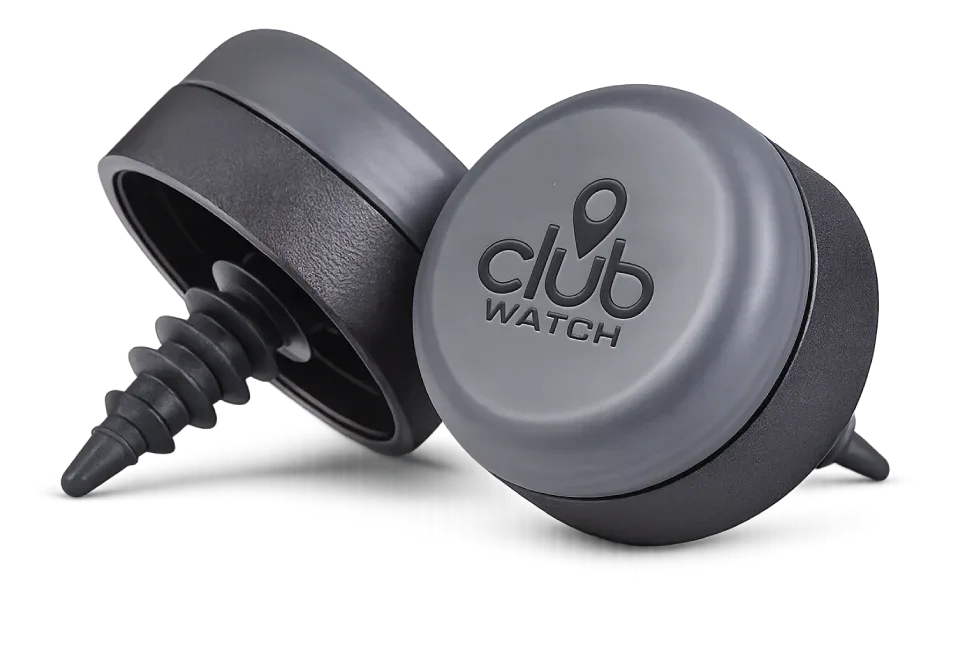
The system starts with tiny sensors that clip onto your club grips. Each sensor contains a Bluetooth chip that communicates with your phone over a short range, typically 50-100 feet depending on the system. You pair the sensors with your phone once, and they stay connected throughout your round.
When you play, the app shows you which clubs are nearby and which ones aren't. If you walk away from your bag and accidentally leave a club behind on the green, the app alerts you before it's too late. Some systems also let you tap your phone to make a sensor beep, so you can physically locate a club in tall grass or under a cart.
The beauty is that this happens invisibly. You're not thinking about the technology while you play. You just know that if something goes wrong, you'll catch it instantly.
Real-Time Alerts: The Game-Changer
Real-time notifications are what separate tracking systems from guessing games. When you get near the end of your round, your phone stays connected to all your sensors. The moment you move out of range of any club, you get a push notification. This gives you time to backtrack before you've driven away from the course.
Unlike checking your bag manually, which golfers forget to do, automated alerts work while you're focused on your game. You don't have to remember to count clubs. The app does it for you.
Some premium versions also offer GPS mapping that shows you exactly where on the course you left a club, which is helpful if you're willing to ask the course to retrieve it. But the real magic happens when you get that alert five minutes after teeing off instead of six hours later at home.
What Makes Location Tracking Different from Other Golf Tech
Golf apps are everywhere. Distance-measurement apps, scorecards, swing analyzers, course guides. Most of these are useful but don't solve the lost-club problem directly.
Location tracking is laser-focused: it's about preventing loss and recovery. It's not trying to improve your swing or teach you the course layout. It's pure peace of mind. You can use it alongside any other golf app you like.
According to research on Golf Digest, the most common reason golfers lose clubs is simple forgetfulness on the green or at the turn. It happens to everyone, from weekend warriors to serious players. Having a backup system that catches these moments is worth its weight in gold.
Setting Up Club Location Tracking on Your Bag

Installation is dead simple. You don't need to do anything invasive to your clubs. Sensors attach to your grip with a small clip or adhesive backing that doesn't damage your grip.
Step one: Buy the sensors. Most systems offer starter packs, like a ClubWatch 4-Pack to protect your putter and wedges if you're just starting, or a ClubWatch 13-Pack for whole-bag coverage if you want complete protection.
Step two: Clip the sensors onto the grips of the clubs you want to track. Most golfers prioritize wedges and putters first because those are the clubs most often left behind on greens.
Step three: Download the app and pair the sensors to your phone via Bluetooth. It takes about two minutes per sensor.
Step four: Play. That's it. You're now tracking every club in real time.
Beyond Lost Clubs: Extra Features Worth Knowing
Some location-tracking systems bundle in extras like AI swing analysis, digital scorecards, and course mapping. These are bonuses, not the core value, but they're nice to have.
Swing analysis uses sensor data to measure club speed and ball contact, giving you feedback on your performance. Digital scorecards integrate seamlessly with the same app, so you're not switching between tools mid-round. Course mapping shows you pin positions and distances, overlaid on satellite views of the hole.
None of these features are essential to solving the lost-club problem, but if you're already using sensors for location tracking, why not take advantage of the extra insights?
Why Golfers Choose Tracking Over Replacement Costs
A modern golf club costs $150 to $300. Replacing a full set over time because you keep losing clubs adds up fast. A location-tracking system costs a fraction of that and pays for itself the first time it saves you a club.
Beyond money, there's the frustration factor. Leaving a club behind derails your day. You can't use it for the rest of your round if you lose it mid-game. You have to make decisions on the fly about club selection with a short bag. It throws off your rhythm and your confidence.
Protection is about more than cost recovery. It's about peace of mind. Knowing that your equipment is safe lets you focus on your game instead of worrying about whether you've left something behind.
Common Mistakes Golfers Make (and How Tracking Prevents Them)

Mistake one: Assuming you'll remember to count your clubs. You won't. Nobody does consistently. Between holes, you're thinking about your score, the wind, your next shot. Tracking eliminates this mental load.
Mistake two: Leaving clubs on the green while you mark your score. Happens constantly. A good tracking system alerts you before you leave the green, so you never make it to the next tee without your full bag.
Mistake three: Forgetting clubs at the turn or at the clubhouse. You set your bag down, grab a water or use the restroom, and your brain moves on. Tracking catches this instantly.
Mistake four: Lending clubs to other players and forgetting to collect them. If you're sharing a club with someone else in your group, the alert reminds you to take it back before you split up after the round.
Getting Started with Location Tracking Today
If you play golf regularly and have ever lost a club or worried about losing one, location tracking is a no-brainer investment. The cost is low, the setup is simple, and the payoff is real.
Golf Club Watch Knowledge makes this easier than ever with a freemium app and affordable sensor packs that scale with your needs. You can start with a couple of sensors on your most-vulnerable clubs and expand later if you want full-bag coverage.
The key is getting started. The sooner you add tracking to your bag, the sooner you stop worrying about losing clubs and start enjoying your round more.
How long do the sensors last on a charge?
Most quality tracking sensors last 2-4 weeks per charge, depending on how frequently you play and how far away from your phone the sensors are. Bluetooth technology is designed for efficiency, so you're rarely charging more than once a month. The app tells you the battery level of each sensor, so you'll never be surprised.
What if my phone is in my cart and my bag is far away?
That's exactly what the system is built for. Bluetooth range typically extends 50-100 feet, which covers most golf course distances between your bag at the side of the green and where you're standing. If you go beyond range, the app logs this as a "separation event" and alerts you. Some systems also let you check your club status in the app even when out of range, using cloud sync.
Can multiple golfers in a group use the same tracking system?
No, each golfer needs their own app and sensors to track their own bag. But golfers who share a cart often appreciate that each person has their own tracking system. It prevents the embarrassing moment where someone picks up the wrong bag or a club accidentally gets mixed up during the round.
Does location tracking interfere with my golf watch or rangefinder?
Not at all. Tracking sensors use low-power Bluetooth, which operates on a different frequency than most golf watches and GPS devices. You can use a rangefinder, a smartwatch, and club tracking simultaneously without any interference. They're designed to coexist peacefully in your tech setup.